
Why This Distinction Matters
When a dog chews up the couch or barks all afternoon, the instinct is often to label it "separation anxiety." But that label covers a wide range of experiences - from mild boredom to a full-blown panic disorder - and treating them the same way leads nowhere useful.
Getting the distinction right matters because the response is completely different. A dog who's under-stimulated needs more exercise, mental engagement, and structure. A dog with true separation anxiety needs a careful, gradual desensitization process - and sometimes veterinary support. Applying the wrong fix doesn't just fail; it can make things worse.
If you've noticed sudden changes in your dog's behavior, it's worth pausing before assuming anxiety is the cause. Physical health issues can look like behavioral problems, and ruling those out first is always a smart step.
What True Separation Anxiety Looks Like
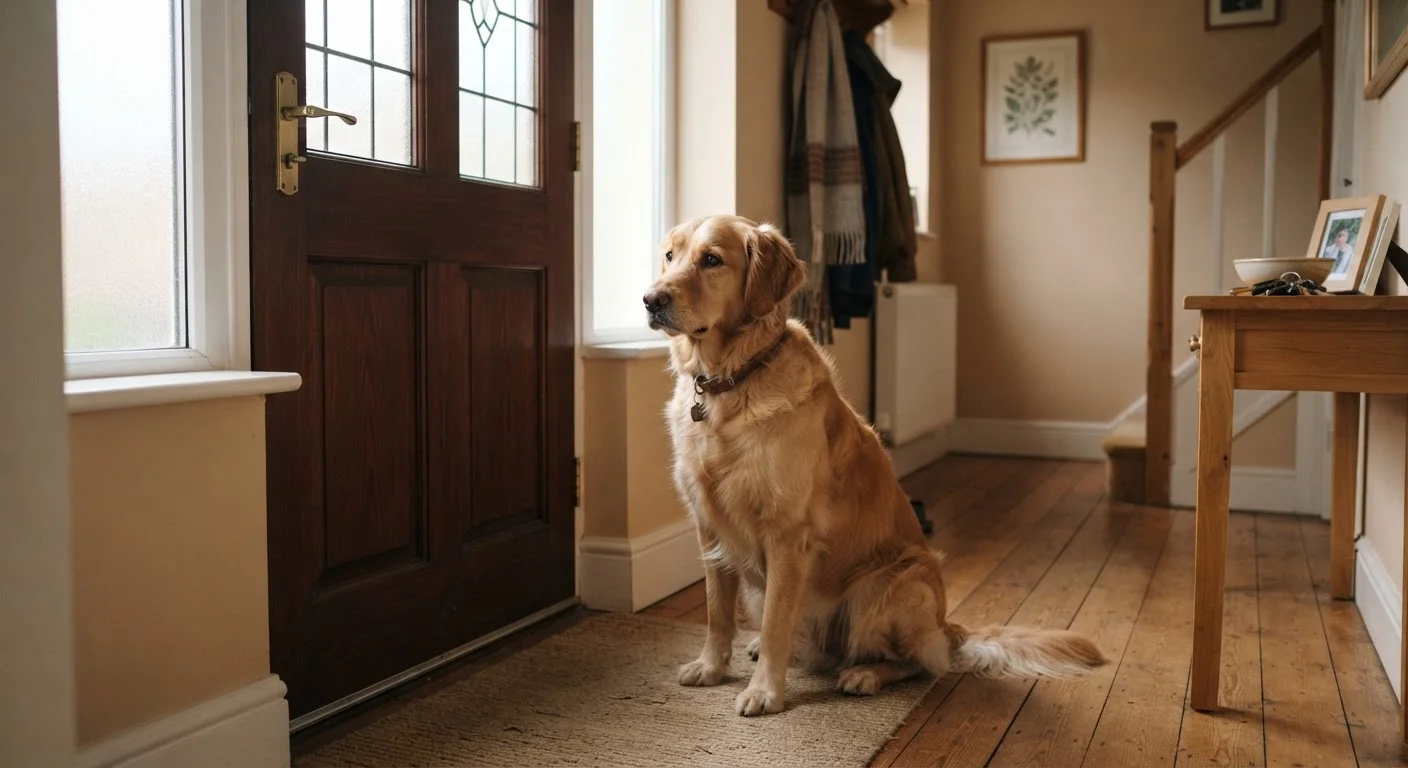
Dogs with genuine separation anxiety don't just act out when bored - they experience panic. The key diagnostic clue is timing. True separation anxiety typically begins before the owner even walks out the door, triggered by departure cues like putting on shoes, picking up keys, or reaching for a coat.
Common signs include:
- Destructive behavior concentrated near doors or windows (escape-seeking, not generalized chewing)
- Continuous vocalization - howling, barking, or whining - that doesn't taper off
- Urination or defecation indoors, even in house-trained dogs
- Excessive salivation, panting, or pacing before departure
- Self-directed behaviors like excessive licking or chewing on paws
The distress is typically highest in the first 30 minutes after departure. One of the most useful things you can do is set up a camera and watch footage of your dog while you're out. What you see will tell you far more than what you find when you return.
~17%
Dogs estimated to have true separation anxiety
Research published in veterinary behavioral journals suggests that while many dogs show some distress when alone, clinically significant separation anxiety affects roughly 14-20% of the dog population.
30 min
Peak distress window after owner departure
Behavioral studies consistently show that dogs with true separation anxiety show the most intense distress in the first 30 minutes after their owner leaves, often peaking within the first 15 minutes.
#1
Reason dogs are surrendered to shelters
Behavioral issues - including separation-related behaviors - are consistently cited as the leading cause of dog relinquishment to US animal shelters, according to shelter intake surveys.
What It Often Isn't: Boredom, Under-Stimulation, and Incomplete Training
A dog who destroys objects, raids trash cans, or barks on and off during the day may simply not be getting enough physical or mental exercise. This is sometimes called "frustration behavior" and it's extremely common - particularly in high-energy breeds left alone for long hours.
Signs that point to boredom rather than anxiety include:
- Destruction is scattered throughout the home, not focused on exits
- The dog settles down after an initial burst of activity
- Behavior improves noticeably after longer walks or structured play
- The dog eats, sleeps, and rests normally while alone
Similarly, some dogs haven't learned that being alone is safe because they were never gradually taught. This is especially common in dogs newly adopted from shelters or those who experienced an abrupt lifestyle change. Building a consistent daily routine is one of the most practical tools for helping a dog learn that departures are predictable and temporary.
Start With a Camera, Not a Conclusion
Before investing in anxiety products or training programs, record your dog for 30-60 minutes after you leave. Free or low-cost apps can turn an old smartphone into a pet monitor. The footage will show you whether your dog settles down, panics, or falls somewhere in between - and that information is the most useful starting point you can have.
Where to Start: A Practical First Response
If you suspect your dog is struggling with alone time, here's a grounded starting point before reaching for any solution:
- Record your dog while you're away. Even 30 minutes of footage gives you real data. Look for the timing, intensity, and duration of distress.
- Rule out medical causes. Inappropriate elimination and restlessness can have physical roots. A veterinary check is always a reasonable first step, especially if the behavior appeared suddenly.
- Assess exercise and enrichment. Is your dog getting adequate physical activity and mental stimulation daily? Puzzle feeders, sniff walks, and structured play can significantly reduce frustration-based behaviors.
- Practice short, calm departures. For mild cases, brief, low-drama absences - starting with just seconds and building gradually - can teach the dog that your leaving isn't a crisis. Avoid long, emotional goodbyes.
- Seek professional support for moderate-to-severe cases. If your dog is injuring themselves, unable to settle at all, or the problem is significantly impacting your household, a veterinary behaviorist or certified applied animal behaviorist (CAAB) can build a structured, individualized plan.
This article is for general informational and educational purposes only. It is not a substitute for professional veterinary or behavioral advice. If your dog is showing signs of significant distress, consult a qualified veterinarian or certified animal behaviorist for guidance specific to your situation.