
Why the First 30 Days Matter So Much
Bringing a dog home triggers a real neurological adjustment period. Dogs are pattern-seeking animals - they learn what to expect from their environment, their people, and their daily rhythm. The habits, associations, and boundaries established in the first 30 days tend to stick, which means early choices carry more weight than most new owners realize.
This isn't a reason to feel pressure. It's a reason to simplify. Instead of trying to do everything at once, focus on a short list of high-impact priorities: safety, routine, basic training, and health. Everything else can wait.
Positive reinforcement
A training method where desirable behaviors are rewarded immediately, making the dog more likely to repeat them. No punishment is involved.
Decompression period
The adjustment window - typically two to four weeks - when a new dog is learning what its environment feels like and whether it's safe.
Crate training
Teaching a dog to use a crate as a comfortable, voluntary resting space. Used to prevent unsupervised accidents and give dogs a calm retreat.
House-training
Teaching a dog to eliminate (urinate and defecate) only in designated outdoor or indoor spots through consistent scheduling and reward.
Recall
The behavior of a dog returning to you when called - one of the most important safety commands to establish early.
Setting Up a Safe, Predictable Environment
Before your dog arrives, dog-proof the space they'll have access to. Secure loose cables, remove toxic plants, and store household chemicals out of reach. A crate or exercise pen gives your dog a defined safe zone - not as punishment, but as a calm retreat that reduces the chance of unsupervised accidents or destructive behavior.
Limit your dog's initial territory. One or two rooms with clear access to a potty spot is easier to manage than a whole house. Expand access gradually as your dog demonstrates house-training progress. Structure at this stage isn't restrictive - it's reassuring.
For puppies especially, the environment shapes confidence long-term. See our guide to socialisation principles for a practical framework on early positive exposure.
Building a Routine Your Dog Can Count On
Dogs thrive on predictability. Feed, walk, and settle your dog at consistent times each day. A simple schedule - morning walk, feeding, midday break, evening walk, bedtime - removes ambiguity and helps your dog anticipate what comes next, which reduces anxiety-driven behaviors.
House-training depends almost entirely on routine. Take your dog outside first thing in the morning, after meals, after naps, and before bed. Reward immediately when they go in the right spot. Accidents indoors are a signal to tighten the schedule, not to react with frustration.
Use a Feeding Schedule to Speed Up House-Training
Feeding your dog at the same times each day makes their bathroom schedule predictable, which makes house-training significantly easier. Free-feeding (leaving food out all day) makes it harder to anticipate when your dog needs to go outside. Start with two scheduled meals per day and adjust based on your vet's recommendation.
Starting Training the Right Way
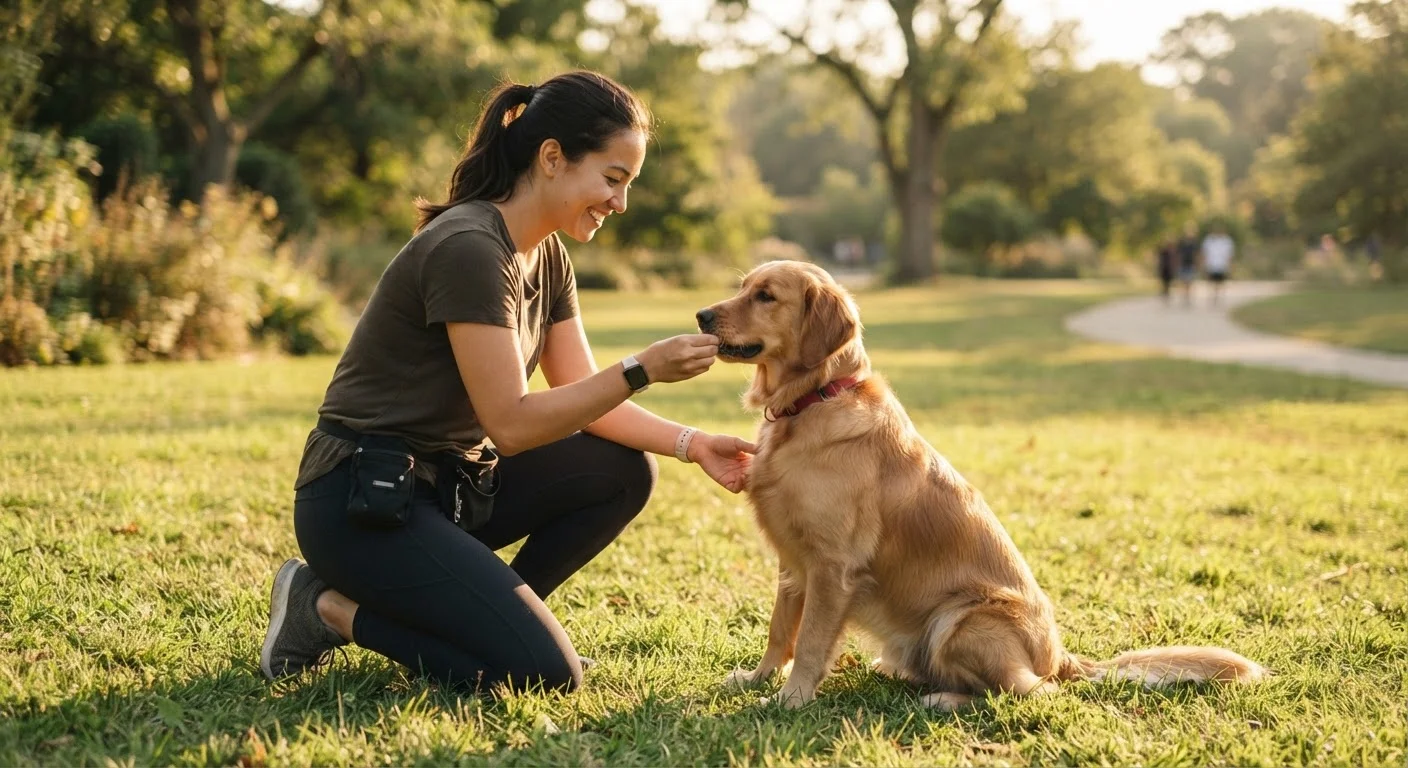
You don't need a complex training plan in week one. Focus on three things: responding to their name, basic recall, and sitting before meals or doorways. Keep sessions under five minutes and use small, high-value food rewards. Positive reinforcement - rewarding the behavior you want - builds trust faster than correction-based approaches and creates a dog that wants to engage with you.
Consistency across all household members matters more than training technique. If one person allows the dog on the sofa and another doesn't, the dog receives conflicting signals and learning slows. Align on a few simple rules before your dog arrives. For a closer look at what quietly derails progress, see training habits that slow results.
If you have a puppy under 16 weeks, socialization is happening right now whether you plan it or not. Read about the socialization window that matters most to make the most of this period.
Health Basics You Shouldn't Skip
Schedule a veterinary visit within the first week. Bring any records from the shelter, breeder, or previous owner. Your vet will check for parasites, confirm vaccination status, and flag anything that needs follow-up. This visit is also a good opportunity to ask about appropriate nutrition, flea and tick prevention, and spay/neuter timing if applicable.
At home, get familiar with what's normal for your dog: how much they eat and drink, what their stool looks like, how they move and breathe at rest. Changes from baseline are often the earliest signal that something is off. Our introduction to pet health for new owners explains the key signals worth tracking from the start.
This article provides general information for educational purposes and is not a substitute for professional veterinary advice. Always consult a licensed veterinarian for guidance specific to your dog's health needs.
What to Expect Emotionally - For Both of You
Many new dog owners experience a mix of joy and overwhelm in the first few weeks - sometimes called the "puppy blues" even with adult dogs. This is normal. You're learning a new being's communication style while adjusting your own schedule and sleep. Give yourself the same patience you'd give your dog.
Your dog, meanwhile, may show signs of stress: hiding, reduced appetite, over-attachment, or restlessness. Most of these behaviors resolve as routine takes hold. However, if your dog shows signs of distress when left alone - destructive behavior, excessive vocalization, or house-training regression - it's worth reading more about separation anxiety in dogs to understand what's happening and what to do next.
The first 30 days aren't about perfection. They're about building a foundation of trust, safety, and consistency that the rest of your relationship can grow from. Once you have those basics in place, you can start building monthly health habits that serve your dog for the long term.