What the Socialization Window Actually Is
Animal behaviorists identify a developmental phase in puppies - typically spanning roughly 3 to 14 weeks of age - during which the brain is especially receptive to learning that the world is safe. This is called the socialization period. Experiences during this window shape neural pathways related to fear and confidence in ways that are difficult to reverse later.
Before about 3 weeks, puppies are neurologically limited and still largely dependent on their mother. After roughly 14 weeks, a natural wariness of unfamiliar things begins to increase. That doesn't mean socialization stops mattering - it always matters - but the ease with which new things become comfortable is highest during this window.
Most puppies arrive in new homes between 8 and 12 weeks, placing them squarely in the second half of this critical period. That means the clock is already running when you bring your puppy home. See our guide to your first week with a new pet for a broader picture of what those early days look like.
3-14 weeks
Primary socialization window in puppies
Animal behaviorists widely recognize this developmental period as the most influential for shaping long-term temperament.
8-12 weeks
Typical age puppies enter new homes
This places most puppies in the second half of the socialization window, making early owner action especially important.
~16 weeks
Age full puppy vaccination is often completed
Waiting until full vaccination to socialize means missing most of the critical window, which is why managed early exposure is recommended by many veterinary organizations.
What to Expose Your Puppy To
Effective socialization covers three broad categories:
- People: Men, women, children, people wearing hats, glasses, uniforms, or using mobility aids. Puppies need to learn that humans come in many forms.
- Environments and sounds: Traffic noise, vacuum cleaners, elevators, hardwood floors, gravel, rain, crowds. Variety builds a flexible nervous system.
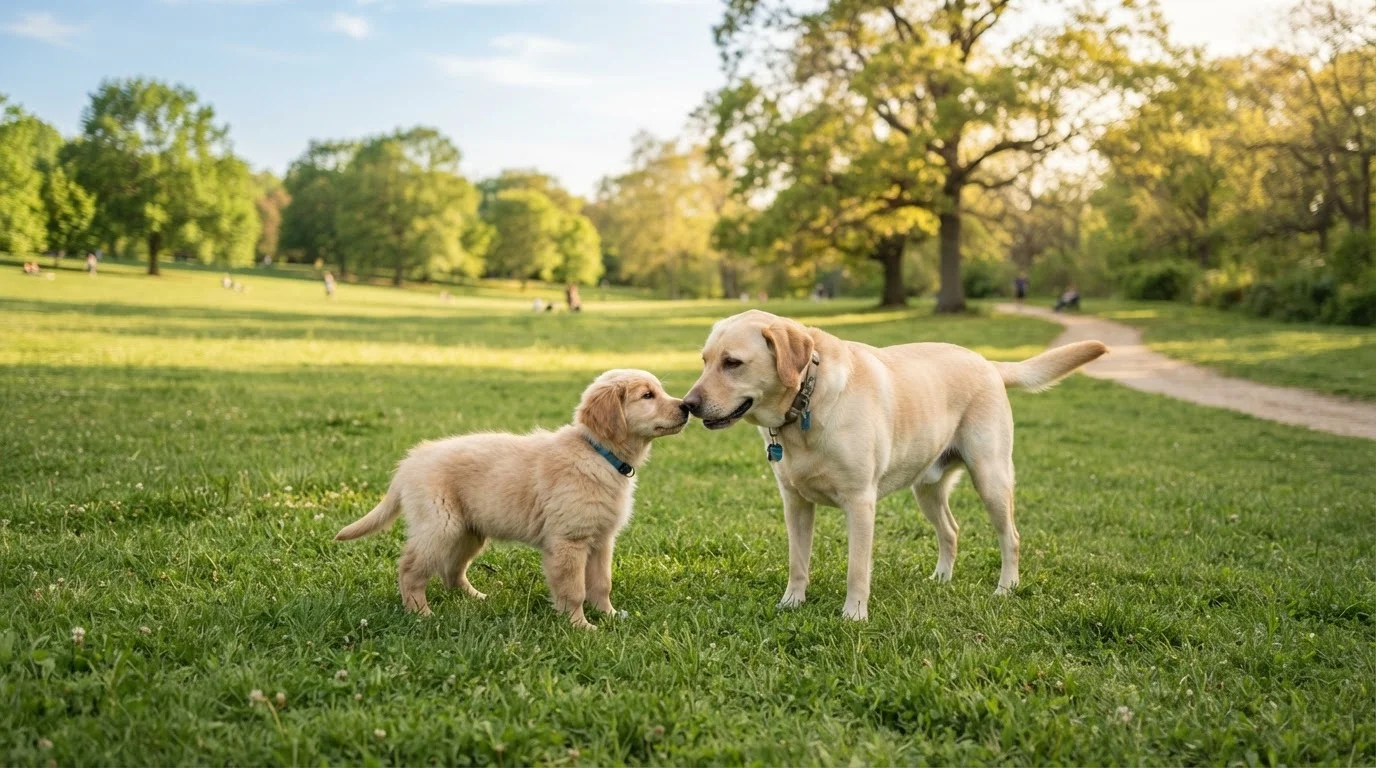
- Other animals: Dogs of different sizes and energy levels, and where safe, other species the puppy is likely to encounter.
Also include handling: touching paws, ears, and mouth gently - this prepares a puppy for grooming and veterinary care. A puppy comfortable being handled is far easier to care for long-term.
For a structured approach to the first month, see our 30-day new dog framework, which weaves socialization into daily routines.
How to Make Exposures Positive
The goal is not simply exposure - it's positive exposure. A puppy that encounters something new and feels frightened has learned that thing is scary. One that encounters something new and receives a treat, calm praise, or a play opportunity has learned it's safe.
A few principles that hold across most situations:
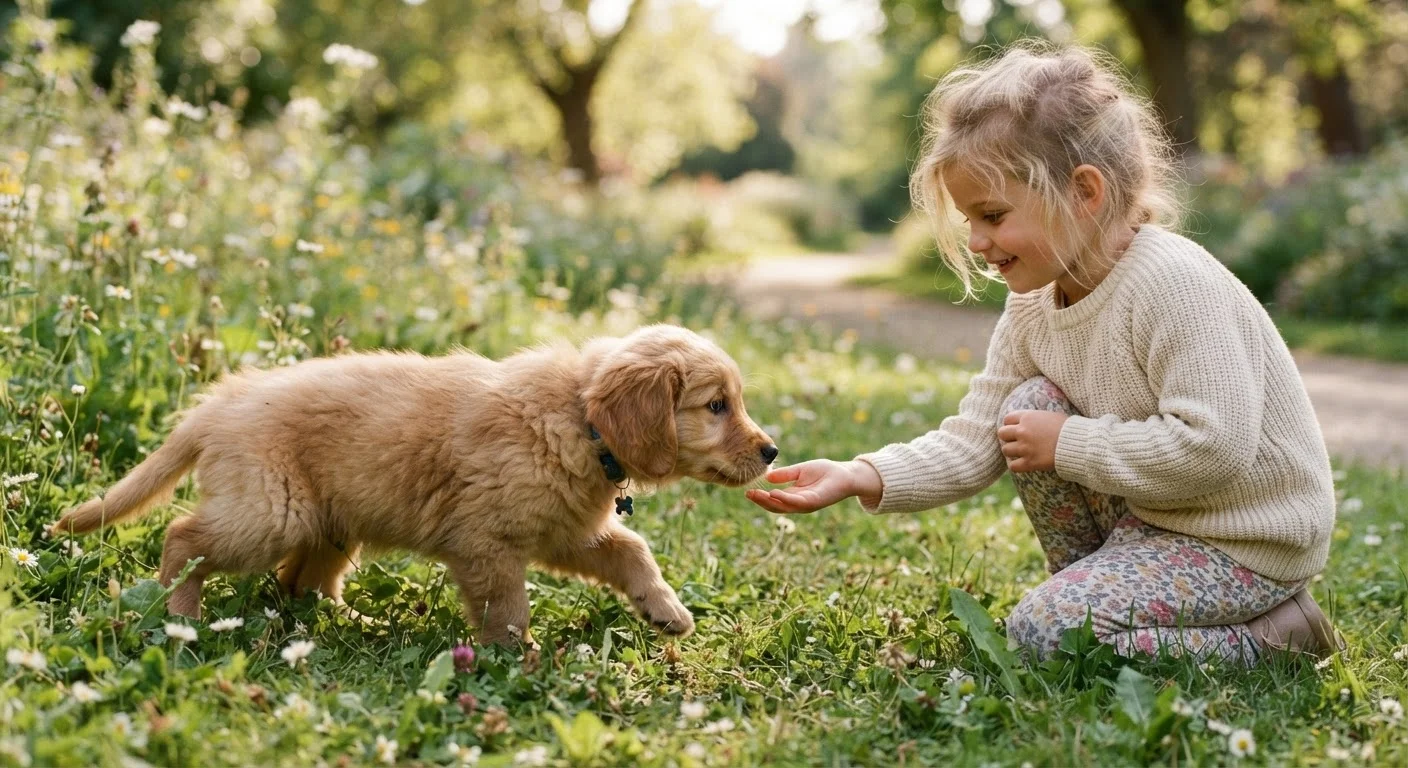
- Let the puppy approach on its own terms. Crouching down and letting the puppy choose to engage is more effective than moving toward a hesitant dog.
- Keep sessions short. Five minutes of quality exposure beats thirty minutes of overstimulation.
- Use high-value food rewards. Pairing a new experience with something the puppy genuinely likes creates a positive association quickly.
- Stay calm yourself. Puppies read human body language. Tense owners often produce tense dogs.
Create a 'socialization checklist' and aim to introduce one or two new experiences per day during the critical window - variety matters more than intensity.
Consistent, low-level exposure to many different stimuli produces a more adaptable dog than occasional high-intensity outings.
Never use the socialization window as an excuse to overwhelm a puppy - one calm, successful encounter is worth more than ten stressful ones.
A single frightening experience during this sensitive period can create lasting aversions, while a positive one builds durable confidence.
The principles that make socialization work apply well beyond puppyhood and are worth understanding in full.
Balancing Socialization and Vaccination Safety
Many new owners are told to keep puppies home until fully vaccinated - typically around 16 weeks. But waiting that long means missing nearly the entire socialization window. Veterinary and behavioral organizations generally agree that the risk of behavioral problems from under-socialization is significant enough to justify carefully managed early exposure.
Practical low-risk options include:
- Visiting homes of vaccinated, healthy dogs
- Attending puppy classes that require health documentation
- Carrying the puppy in high-traffic public areas (exposing them to sights and sounds without ground-level contact)
- Inviting vaccinated, calm adult dogs to your yard
Always discuss timing and vaccination status with your veterinarian. They can help you weigh your specific puppy's risk level against the developmental benefits of early exposure. This is general guidance - your vet's individualized recommendation takes priority.
Signs Your Puppy Is Overwhelmed
Pushing a puppy past its comfort threshold doesn't build confidence - it builds fear. Learning to read stress signals is one of the most useful skills a new owner can develop.
Watch for:
- Tucked tail or lowered body posture
- Yawning, lip licking, or excessive panting outside of heat
- Trying to hide or move away from the stimulus
- Freezing in place
- Refusing food they would normally take eagerly (a reliable sign of stress)
When you notice these signals, calmly move the puppy away from the trigger. Don't force them back. Create more distance and try again another day at a lower intensity. Slow, successful exposures are always better than fast, frightening ones.
For context on what healthy behavioral baselines look like, our pet health starting point for new owners covers the essentials.
After the Window Closes
If you adopt a puppy after 14 weeks - or an adult dog - socialization is still possible, but it typically requires more repetition and patience. The nervous system is less plastic, meaning new experiences take longer to feel familiar rather than threatening.
The same principles apply: go slowly, use positive reinforcement, and never force interactions. Progress can absolutely be made; it just tends to be more gradual. Some adult dogs with limited early socialization will always be more cautious in certain situations, and that's okay - management and training can help them cope comfortably.
As your dog moves beyond the basics, adapting your training approach for different learning stages will help you keep sessions effective as they grow.
This article is for general informational and educational purposes. It is not a substitute for professional veterinary or behavioral advice. Consult a licensed veterinarian or certified animal behaviorist for guidance specific to your puppy's health and developmental needs.