
Why the First Week Matters So Much
Bringing a pet home is exciting - but for the animal, it can be disorienting. A new pet has left behind familiar smells, sounds, and companions. Everything in your home is unknown. How you handle the first seven days lays the groundwork for trust, routine, and long-term wellbeing.
The good news: you don't need to do everything perfectly. You need to do a few things consistently. Predictability is what helps a pet feel safe, and safety is what allows personality and attachment to emerge.
Prep Before Your Pet Arrives
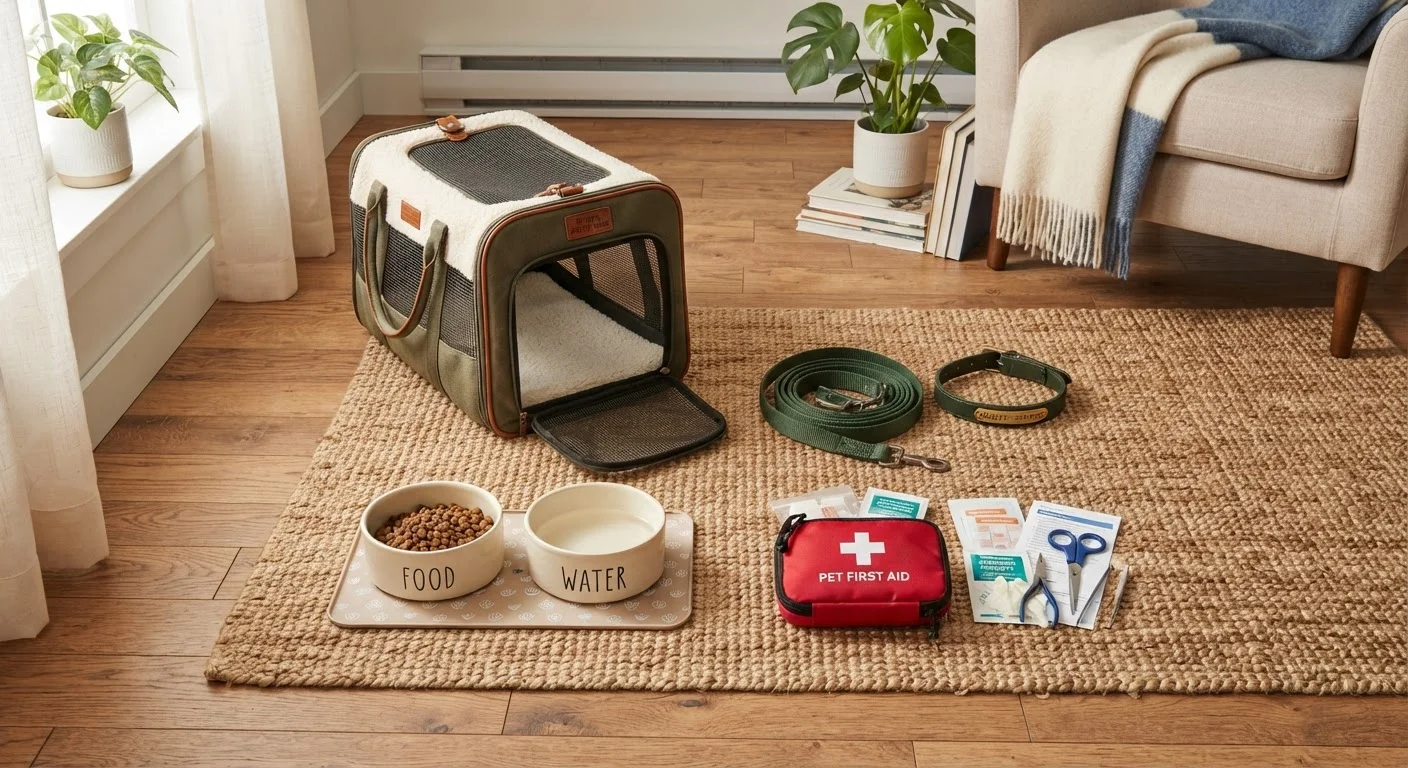
Having food, bedding, a litter box or crate, and a vet contact ready before day one removes a lot of early scrambling. See our day-one readiness checklist for a complete list of what to have in place.
What's Normal Behavior in Days One Through Three
New pet owners are often alarmed by behavior that is completely typical during the decompression period. Here's what you're likely to see:
- Hiding or staying close to walls: This is self-protective behavior, not a sign your pet dislikes you.
- Reduced appetite: Stress suppresses hunger. Most pets resume normal eating within 24-48 hours.
- Excessive sleeping: Processing a new environment is genuinely tiring for animals.
- Vocalizing more than usual: Whining, meowing, or chirping can be a response to unfamiliar sounds and smells.
- Clinginess or avoidance: Some pets want constant reassurance; others want space. Both are normal.
What you're watching for isn't perfection - it's gradual improvement. Most pets show a visible shift in comfort by day three or four.
Don't Overwhelm Your Pet Early On
It's tempting to show off your new pet or let kids and friends spend lots of time with them right away. But too much handling or noise in the first 48 hours can push stress levels higher and slow adjustment. Keep the household calm and give your pet time to take things in at their own pace.
Setting Up a Safe, Low-Stress Environment
Before your pet arrives - or as soon as possible after - designate a safe space: a small, quiet area with bedding, water, and shelter from foot traffic. This gives your pet somewhere to retreat when the world feels like too much.
Resist the urge to redecorate, rearrange furniture, or introduce major household changes during the first week. Stability in the environment mirrors the stability you're trying to create in routine.
For dogs especially, the early days are a critical window for learning what your household looks like and who is in it. Our guide on what to prioritize in the first 30 days with a new dog walks through a low-stress framework for building on that foundation.
Decompression period
The adjustment window - usually the first few days to weeks - when a new pet gets used to its surroundings, smells, sounds, and people before it shows its true personality.
Stress behaviors
Actions like hiding, panting, yawning excessively, or refusing food that signal a pet is feeling anxious or overwhelmed rather than ill.
Safe space
A designated area - a crate, a corner with bedding, or a quiet room - where a new pet can retreat and feel protected from stimulation.
Baseline wellness exam
An initial veterinary checkup that documents your pet's current health, weight, and any concerns - useful as a reference point for all future care.
Routine
A predictable daily schedule for feeding, walks, play, and sleep that helps pets feel secure by knowing what comes next.
Eating, Sleeping, and Bathroom Basics
Consistency in feeding, sleep location, and bathroom access is your most powerful tool in week one. Aim to feed at the same times each day, in the same spot, using the same food your pet was eating before the transition - sudden food changes compound stress and can cause digestive upset.
For dogs, take bathroom breaks on a predictable schedule: first thing in the morning, after meals, after naps, and before bed. For cats, place the litter box somewhere quiet and accessible, away from food and water. Small animals and birds have their own specific needs - confirm appropriate husbandry with your veterinarian before or shortly after bringing them home.
Track what your pet eats, when they sleep, and how often they use the bathroom. This simple log becomes very useful if you need to describe changes to a vet later. You can also review signs of a healthy pet to know what you're looking for during these early observations.
Signs to Watch For and When to Call a Vet
Some changes are adjustment. Others need professional attention. The following warrant a call to your veterinarian rather than a wait-and-see approach:
- No eating or drinking for more than 48 hours
- Vomiting or diarrhea lasting more than 24 hours
- Visible lethargy that doesn't improve after day two
- Labored breathing, coughing, or discharge from eyes or nose
- Signs of injury, limping, or pain responses when touched
If you're unsure, call your vet and describe what you're seeing. Most clinics are happy to help you determine whether something needs an appointment or just monitoring. For a broader introduction to reading your pet's health, Pet Health for New Owners is a useful next step.
As week one ends, you'll likely notice your pet starting to relax - exploring more freely, making eye contact, and engaging with you. That shift is the beginning of your relationship. The work you put in now, patient and low-key as it may feel, is exactly what makes that connection possible. When you're ready to take the next step, explore how socialising a new pet can help build their confidence long-term.
This Is General Guidance, Not Medical Advice
This article covers common adjustment experiences for healthy pets. Every animal is different, and conditions that seem like normal stress can sometimes indicate illness. If you're ever unsure whether something is behavioral or medical, your veterinarian is the right person to ask.
This article is for general informational and educational purposes only and is not a substitute for professional veterinary advice. Always consult a licensed veterinarian for concerns about your pet's health.