
Why Preparing Before Day One Matters
Bringing a new pet home is an exciting milestone - and also a surprisingly hectic one. Pets arriving in an unprepared space often experience extra stress, and so do their owners. A few hours of preparation before pickup can make the transition far smoother for everyone involved.
This checklist covers the essentials any new pet owner should have in place before their animal walks through the door. Whether you're welcoming a dog, cat, or small animal, the core principles are the same: secure the environment, gather the supplies, establish identification, and have a veterinary plan ready.
For a room-by-room look at removing hazards before your pet arrives, see our home pet-proofing guide.
Safe Space and Shelter
Food, Water, and Feeding Supplies
Identification and Safety
Veterinary Readiness
Basic First Aid and Hygiene
Tools and Resources You'll Want On Hand
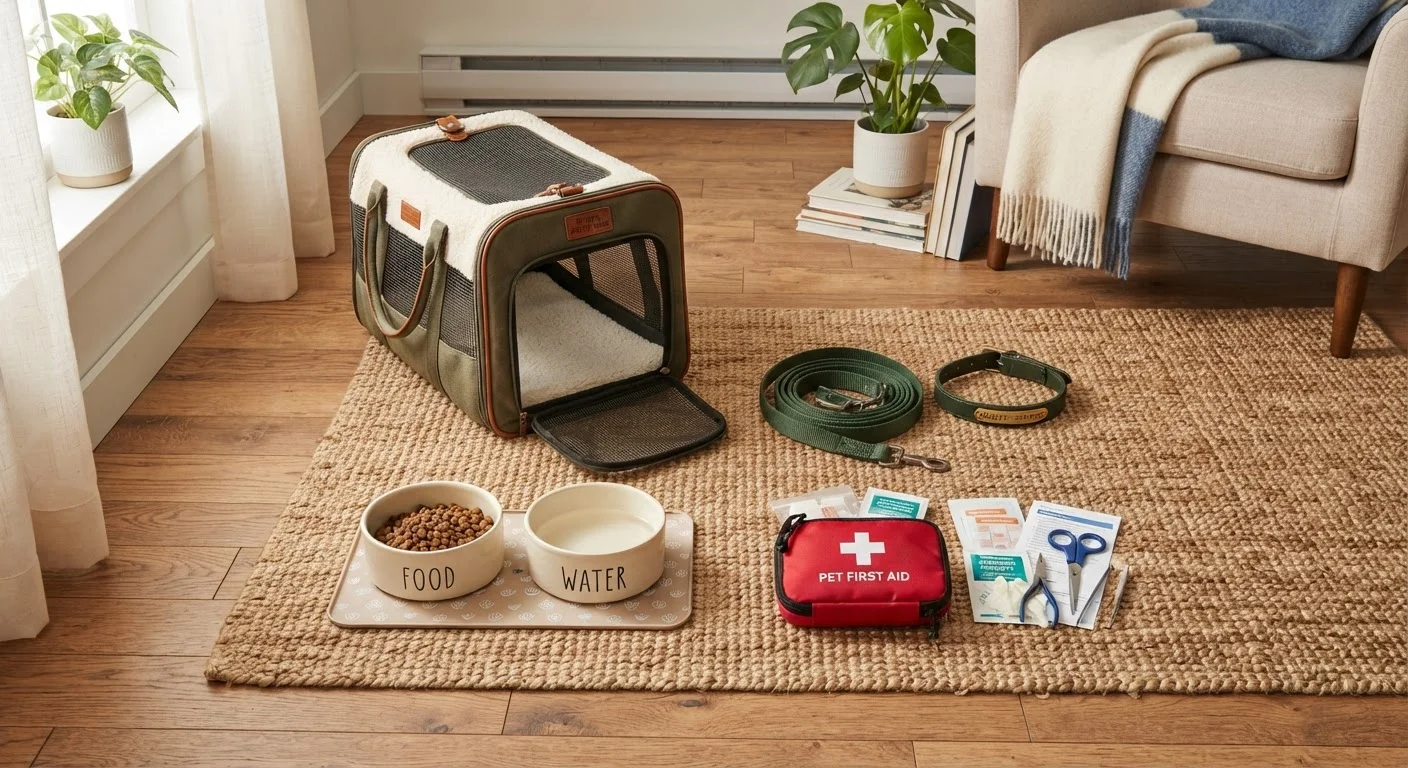
The items below aren't brand recommendations - they're categories of supplies every new pet owner should source before arrival. Focus on function over flashiness, especially in the first week.
Collar and ID Tag
Provides immediate, visible identification so your pet can be returned to you if they get loose in the first days.
Appropriately Sized Crate or Carrier
Serves as a safe, den-like space for rest and transport, and aids in housetraining for dogs.
Food and Water Bowls
Sized and placed consistently so your pet can eat and drink without competition or confusion.
Pet First Aid Kit
Allows you to handle minor injuries at home and stabilize a situation before a vet visit if needed.
Leash and Harness (dogs)
Required for safe outdoor movement and controlled introductions to the neighborhood from day one.
Litter Box and Litter (cats)
Placed in a quiet, accessible location so cats can locate and use it independently from arrival.
Enzymatic Cleaner
Breaks down pet waste odors at a molecular level, discouraging repeat accidents in the same spot.
Digital Thermometer (pet-safe)
Allows you to take your pet's temperature at home if illness is suspected, with guidance from your vet.
Once your pet is settled, you'll also want to think beyond the immediate setup. Our monthly pet health habits guide gives you a practical framework for building the kind of routine that catches problems early.
What to Do in the First 48 Hours
Even with everything in place, the first two days set a meaningful tone. Resist the urge to introduce your pet to a full house of people immediately. Give them time in their designated safe space to get used to smells, sounds, and their new surroundings.
Avoid Overwhelming Your Pet with Visitors
It's tempting to show off your new pet right away, but a house full of excited strangers can spike stress levels significantly during the first 48 hours. Keep introductions limited and calm during the initial adjustment window. Give your pet a chance to explore at their own pace before expanding their social circle.
Keep feeding consistent with whatever diet the shelter, breeder, or previous owner used - at least initially. Sudden food changes can cause digestive upset. If you plan to transition to a different food, do it gradually over seven to ten days.
Document your pet's baseline behavior during this window: how much they eat, whether they use their designated bathroom area, and how they respond to you. This baseline becomes useful context if you ever need to describe changes to a veterinarian.
For a deeper look at what healthy behavior actually looks like day-to-day, visit our guide to healthy pet signs - it covers subtle indicators first-time owners often miss. And if you're bringing home a dog specifically, the first 30 days with a new dog article outlines a low-stress framework for what to prioritize next.
This article is for general informational purposes only and does not constitute veterinary advice. Always consult a licensed veterinarian for guidance specific to your pet's health and needs.