Why Pet Health Myths Are So Persistent
Many pet health beliefs have been passed down through generations of well-meaning owners. Some started as partial truths; others were folk wisdom that stuck simply because it sounded plausible. As a new or early-stage pet owner, it can be genuinely hard to tell which advice to trust - especially when it comes from someone you respect, like a parent or a longtime pet owner friend.
The goal here isn't to make anyone feel foolish. These myths are common precisely because they contain a grain of logic. What matters is understanding where they fall short, so you can recognize what healthy and unhealthy actually looks like in your pet - and know when a veterinarian's input is warranted. For a broader look at how good intentions can still lead owners in the wrong direction, see our article on pet health assumptions that lead owners astray.
Myth
A dog's mouth is cleaner than a human's, so letting a dog lick a wound helps it heal.
Fact
Dog saliva contains bacteria that can cause infection in open wounds, and repeated licking delays healing by irritating tissue.
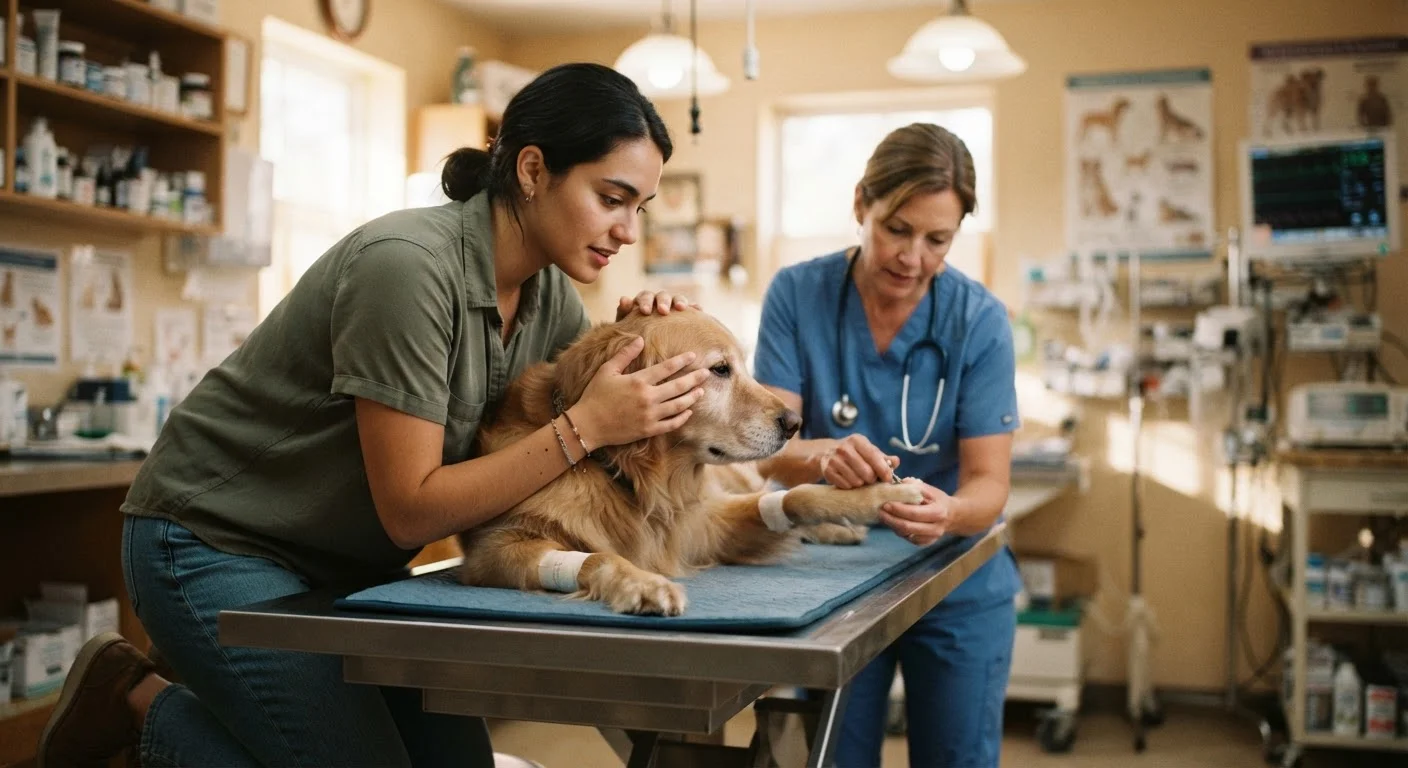
This belief likely persists because dogs instinctively lick their own injuries - and because saliva does contain some compounds with mild antimicrobial properties. However, veterinary guidance is clear: a dog's mouth also harbors bacteria such as Pasteurella and Capnocytophaga that can infect human or animal wounds. Beyond the infection risk, constant licking keeps wounds moist and prevents scabbing, which slows rather than supports recovery. If your pet is licking a wound on their body, an Elizabethan collar (commonly called an e-collar) is a practical way to prevent access while healing takes place.
Myth
Cats always land on their feet, so falls are rarely dangerous for them.
Fact
Cats have a righting reflex that helps them orient mid-fall, but they absolutely can - and do - suffer fractures, internal injuries, and jaw trauma from falls.
The feline righting reflex is real: cats can rotate their bodies mid-air to land feet-first. However, this reflex does not guarantee a safe landing, especially from shorter distances where there isn't enough time to fully correct posture, or from very high drops where impact force is extreme. Veterinarians see injuries from what's sometimes called high-rise syndrome regularly, ranging from broken limbs to chest trauma. Keeping windows screened and balconies secured is a straightforward way to reduce fall risk for indoor cats.
Myth
If a dog's nose is cold and wet, it's healthy - if it's warm or dry, something is wrong.
Fact
Nose temperature and moisture vary throughout the day based on activity, hydration, and environment, and are not reliable health indicators on their own.
A dog's nose naturally shifts between wet and dry depending on how recently the dog slept, drank water, or spent time in dry air. Neither state alone signals illness. Health assessments should instead focus on a cluster of observable signs: energy level, appetite, breathing, gum color, and behavior changes. A persistently cracked, discolored, or heavily crusted nose, combined with other symptoms, would be worth mentioning to a veterinarian - but a single warm nose after a nap is not cause for concern.
Myth
Indoor pets don't need vaccines or parasite prevention because they're never exposed to the outdoors.
Fact
Indoor pets can still be exposed to pathogens and parasites through open windows, other animals, or items brought in from outside.
Fleas can hitch rides on clothing and shoes. Mosquitoes - which transmit heartworm to both dogs and cats - can enter through windows and doors. Viruses can be carried on hands or surfaces from outdoor environments. Many veterinary associations recommend that even strictly indoor cats stay current on core vaccines (such as rabies and FVRCP) and receive appropriate parasite prevention. Your veterinarian can help determine the right protocol based on your pet's specific living situation and local disease prevalence.
Myth
Pets slow down and need less care as they age - that's just normal aging.
Fact
While some slowing is natural, significant changes in activity, appetite, or behavior in older pets often signal conditions that benefit from early veterinary attention.
Reduced activity in a senior pet can reflect pain from arthritis, dental disease, organ changes, or other conditions - not just inevitable aging. Many of these issues are manageable when caught early. Most veterinarians recommend twice-yearly wellness visits for dogs and cats in their senior years (generally considered 7+ for dogs and cats, though this varies by size and species). Observing your pet's baseline - how much they eat, drink, move, and interact - makes it easier to notice meaningful shifts and bring them to your vet's attention promptly.
Building a Clearer Picture of Your Pet's Health
Debunking myths is only half the job. The other half is knowing what to actually watch for. Healthy pets generally have consistent energy levels appropriate for their age and species, a stable appetite, clear eyes, and a coat or skin without persistent irritation. Any abrupt change in these baselines - not a warm nose or a quiet afternoon - is a more meaningful signal worth tracking.
Don't Rely on Single Signs in Isolation
One symptom rarely tells a complete story. A dog that refuses breakfast once is different from a dog that has skipped meals for two days and is also lethargic. Train yourself to look at patterns and combinations of changes rather than reacting to any single observation. If you're uncertain, a quick call to your veterinarian's office is always appropriate.
Routine veterinary care is your most reliable tool. Annual or biannual wellness visits allow a professional to catch issues that aren't visible to the untrained eye, and they give you a chance to ask questions before misinformation fills the gap. If you're also navigating behavioral questions, it's worth knowing that similar myths affect training practices - our piece on pet training myths that frustrate more than they help covers those in detail.
This article is for general informational purposes only and does not constitute veterinary advice. Always consult a licensed veterinarian for guidance specific to your pet's health.