The Core Planning Difference: One Decision-Maker vs. Many
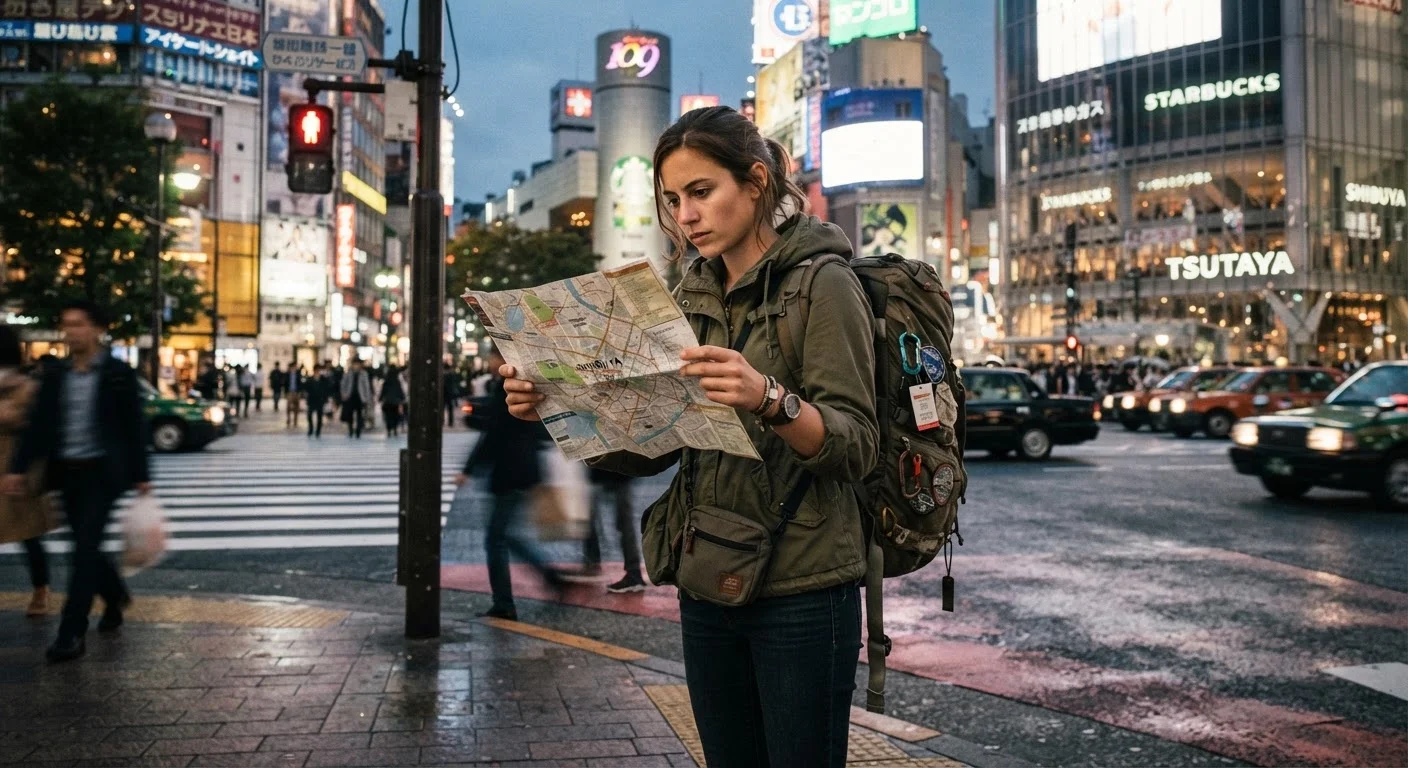
The most fundamental difference between solo and group travel isn't the destination - it's who's making decisions and how fast those decisions can happen. When you're traveling alone, every call is yours: where to stay, what to eat, how long to spend at any given spot. That simplicity is powerful. It also means every mistake lands entirely on you.
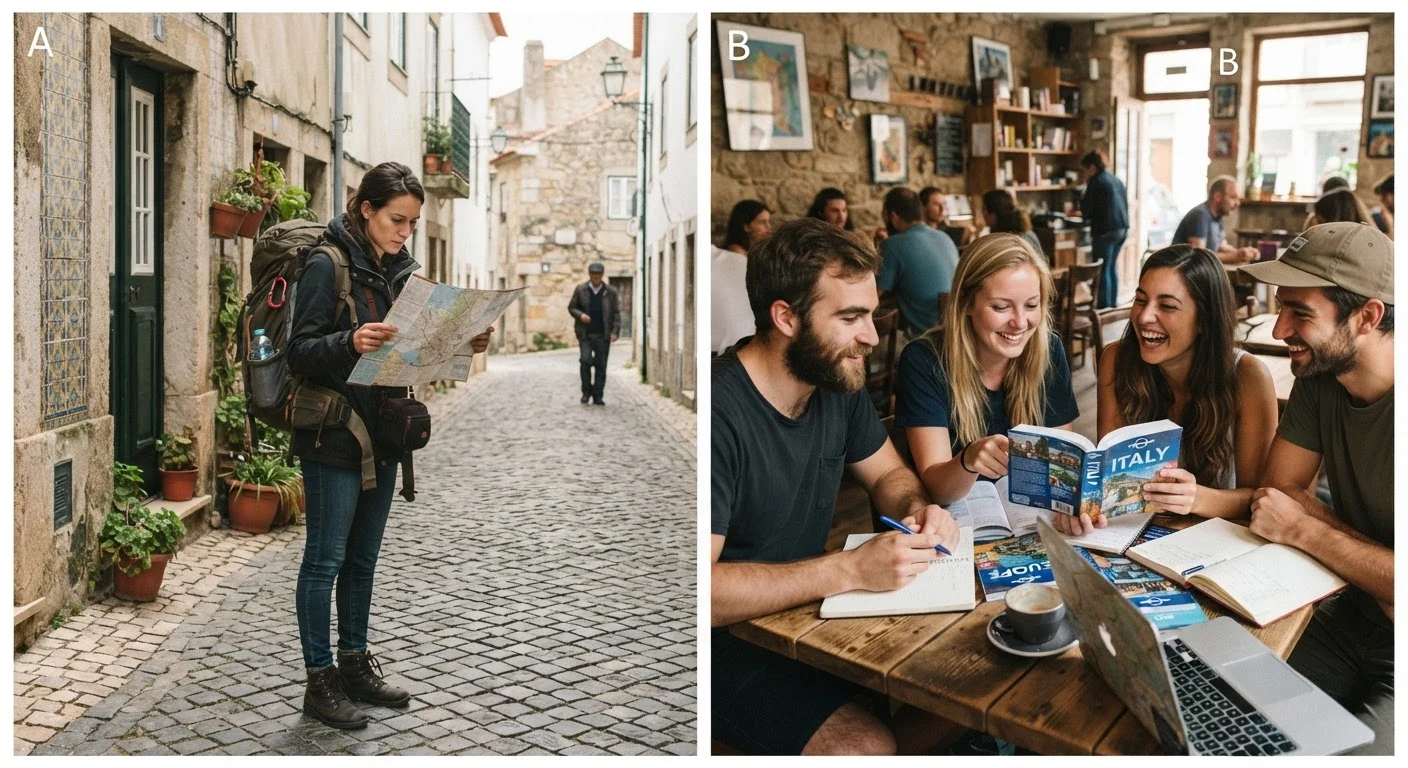
Group travel introduces a coordination layer that doesn't exist when you're solo. Even a trip with two people requires agreeing on dates, splitting costs, and navigating different expectations about pace and comfort. With four or more travelers, the planning effort can rival organizing a small event. Decisions that take a solo traveler five minutes - like choosing accommodation - can take a group days of back-and-forth.
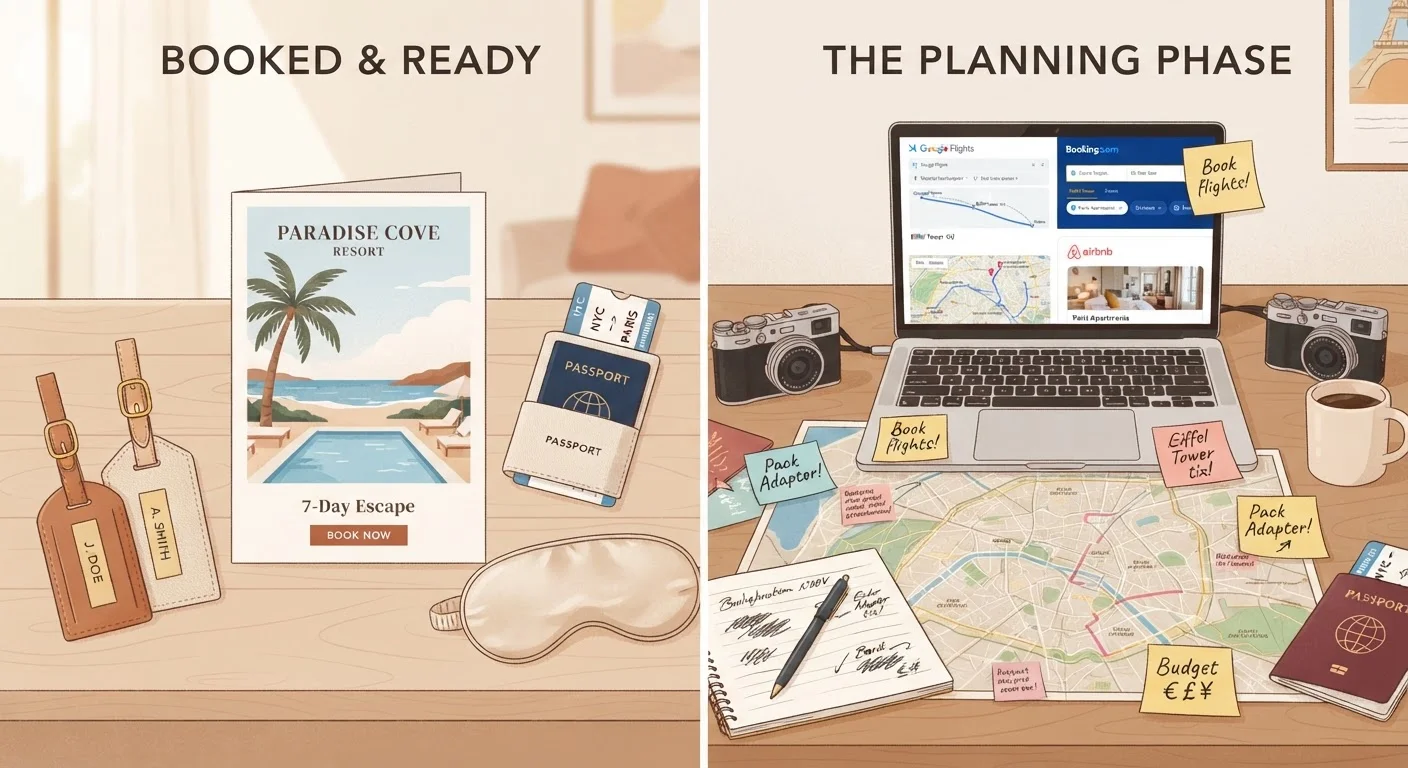
This isn't a reason to avoid group travel. It's a reason to start earlier and be more intentional. If you're planning with others, locking in a shared destination and travel window before anything else is non-negotiable. Everything downstream - flights, accommodation, activities - becomes dramatically easier once those two variables are fixed. For a practical sequencing framework, see when to book each element of your trip.
Budget Planning: Solo Simplicity vs. Group Complexity
Solo travelers own their budget completely. You set a daily spending target, track it yourself, and adjust in real time with no negotiation required. The downside: you absorb 100% of fixed costs. A hotel room, a rental car, a private tour - none of these costs get divided. That's a real constraint, especially in destinations where shared accommodation options are limited.
Groups benefit from cost-sharing on accommodation and transport, which can reduce per-person spend noticeably. But shared budgets create friction. Misaligned expectations about spending - one person happy with a hostel dorm, another expecting a private room - are among the most common sources of group travel conflict. Addressing budget expectations explicitly before booking anything is one of the most underrated steps in group trip planning.
~72%
Solo travelers citing flexibility as primary motivator
According to recurring traveler surveys by the Solo Travel Society, flexibility consistently ranks as the top reason people choose to travel alone.
3-5 days
Average extra lead time needed for group bookings
Travel planners commonly note that coordinating group trips requires several additional days of runway compared to solo planning, particularly for date alignment.
A practical approach for groups: agree on a per-person daily budget range upfront, then categorize must-haves versus nice-to-haves. Assign one person to track shared expenses and settle up at natural checkpoints rather than at the end of the trip. For broader strategies on managing costs while traveling, the budget travel tips hub covers approaches that apply to both solo and group trips.
Safety and Logistics: Where the Gaps Widen
Safety planning looks meaningfully different depending on whether you're alone or with others. Solo travelers carry more personal responsibility: sharing itineraries with someone at home, keeping emergency contacts accessible, and being more deliberate about accommodations in unfamiliar areas. None of this is complicated, but it requires conscious effort that group travelers often handle passively through sheer presence of others.
A Note on Safety Information
Safety conditions vary significantly by destination, season, and individual circumstances. General guidance here is informational and not a substitute for checking current travel advisories from official government sources before you go. Always verify entry requirements, local laws, and health recommendations directly with authoritative sources.
Logistics - flights, transfers, accommodation check-ins - are operationally simpler for solo travelers. One ticket, one reservation, one person to coordinate. Groups require synchronized bookings, and even minor schedule differences can cascade. If one person's flight is delayed, it affects everyone's transfer plan. Building buffer time into group itineraries isn't optional - it's essential.
For travelers going solo, common solo travel safety patterns worth understanding outlines the situations that most consistently increase risk and how to avoid them. Group travelers should use the travel safety and health hub as a general reference regardless of group size.
Side-by-Side: How Planning Tasks Change
The table below captures the practical planning differences across the most common trip tasks. Neither column is universally harder - they're just different in kind.
| Criterion | Solo Travel | Group Travel |
|---|---|---|
| Decision speed | Immediate - no input needed | Slower - requires consensus |
| Budget control | Full personal control | Shared, requires alignment |
| Accommodation costs | Full cost absorbed solo | Split across travelers |
| Itinerary flexibility | Change plans anytime | Changes affect the whole group |
| Safety buffer | Must be self-managed | Built-in through group presence |
| Booking complexity | Minimal - one person | High - synchronized bookings needed |
| Research workload | Personal preferences only | Must account for everyone |
| Conflict risk | None | Moderate to high without prep |
One area that often surprises first-time group travelers is how much longer the research phase takes. When you're solo, you research based on your own preferences. In a group, someone has to aggregate everyone's input - dietary restrictions, mobility considerations, activity interests - before a single booking makes sense. Assigning that coordination role to one person, rather than leaving it open, tends to move things forward considerably faster.
If the overhead of group coordination sounds unappealing but traveling solo feels like too much solo responsibility, a package holiday vs. self-planned trip comparison may surface a middle path worth considering.