The Depreciation Gap: Where the Biggest Difference Lives
Depreciation - the drop in a vehicle's market value over time - is often the single largest cost of car ownership, yet it rarely appears on a window sticker. Understanding how depreciation works before you sign anything can save thousands of dollars over a few years.
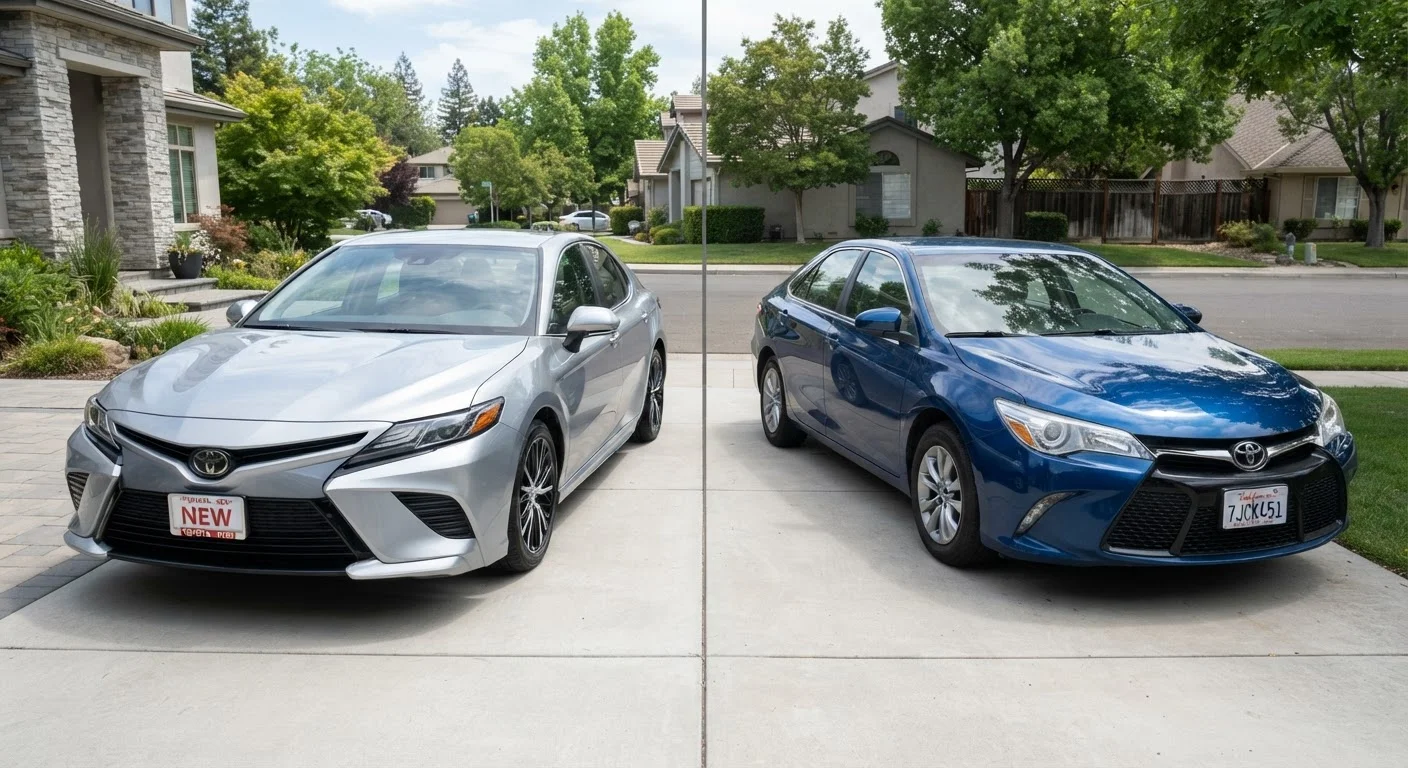
A brand-new vehicle can lose roughly 15-25% of its value the moment it leaves the dealership lot, and commonly depreciates 40-60% within five years, depending on the model and market conditions. When you buy a two- or three-year-old used vehicle, the original owner has already absorbed that steepest part of the curve. You pay a lower price and face a gentler rate of further depreciation going forward.
The catch: if you intend to keep a new car for a long time - say, a decade - that initial depreciation sting spreads across many more years of use, which can make the per-year cost more competitive than it first appears.
| New Car | Used Car | |
|---|---|---|
| Purchase Price | Higher sticker price | Lower upfront cost |
| Depreciation Exposure | Steepest in first 1-3 years | Prior owner absorbed peak drop |
| Typical Loan Interest Rate | Generally lower rate | Generally higher rate |
| Warranty Coverage | Full manufacturer warranty | Limited or none (CPO adds some) |
| Repair Risk | Low during warranty period | Higher, especially older/high-mileage |
| Safety Technology | Latest features standard | May lack newer safety systems |
| Best Ownership Horizon | 7+ years to offset depreciation | Short to medium term |
Financing Costs: Interest Rates and Loan Terms
How you pay for the car shapes the total cost as much as the purchase price does. Lenders generally offer lower interest rates on new-car loans than used-car loans, because new vehicles are considered lower-risk collateral. The difference can be meaningful - sometimes two to four percentage points - depending on your credit history and the lender's policies.
However, a lower rate on a higher principal can still produce a larger monthly payment and more total interest paid than a higher rate on a smaller used-car balance. Running the actual numbers with a loan calculator, rather than focusing on rate alone, gives a clearer picture.
Your credit score plays a direct role in what rate you are offered. Learning how credit scores and loans work is a worthwhile step before you visit any lender. A strong credit profile can unlock rates close to promotional offers; a thin or damaged credit file may push you toward the higher end of the rate range regardless of whether the car is new or used.
Also consider the trade-offs between paying cash and financing - preserving your savings has real value, but so does avoiding interest entirely.
Get Pre-Approved Before You Shop
Applying for loan pre-approval from a bank or credit union before visiting a dealership gives you a concrete rate benchmark. This prevents you from relying solely on dealer-arranged financing, which may not reflect the most favorable terms available to you. Pre-approval also clarifies your actual budget ceiling before emotion enters the equation.
Warranties, Reliability, and Repair Risk
New cars come with a manufacturer's limited warranty - typically three years or 36,000 miles bumper-to-bumper, and five years or 60,000 miles on the powertrain, though terms vary by manufacturer. That coverage means unexpected repair bills are largely the manufacturer's problem, not yours, during the warranty window.
Used cars may arrive with little or no remaining warranty. Older vehicles with high mileage carry a statistically higher probability of needing repairs, and repair costs can quickly erode the savings from a lower purchase price. A certified pre-owned (CPO) vehicle occupies a middle ground: it has been inspected to a manufacturer standard and comes with an extended warranty, typically at a price premium above non-CPO used vehicles but well below new.
Before buying any used vehicle, a pre-purchase inspection by an independent, licensed mechanic is one of the most cost-effective steps you can take. A few hundred dollars spent upfront can reveal problems that might cost thousands to fix later.
For a fuller view of what ongoing ownership costs look like beyond the purchase price, see the total cost of owning a car, which covers fuel, insurance, tires, and servicing.
Making the Decision: A Framework for Young Adults
There is no universally correct answer, but a few questions help narrow the choice:
- What is your total monthly budget for the vehicle, including insurance and fuel? A lower purchase price is only beneficial if the remaining ownership costs stay within reach. A practical overview of every major cost category can help you build that full budget picture.
- How long do you plan to own it? Short ownership periods (under three years) favor used vehicles, where depreciation has already softened. Longer ownership periods give new cars more time to spread their depreciation cost.
- How much repair risk can you absorb? If an unexpected $1,500 repair would cause real financial hardship, the warranty protection of a new or CPO vehicle may be worth its premium.
- What does your credit profile look like? A strong credit score maximizes your financing options on either side of the new-versus-used divide.
Once you have settled on a direction, ongoing maintenance habits matter just as much as the initial purchase decision. Explore straightforward car maintenance guides to keep whichever vehicle you choose running reliably for years.
This article is for general informational and educational purposes only and does not constitute financial or legal advice. Consult a qualified financial professional for guidance tailored to your individual circumstances.