How Small Problems Compound Into Large Bills
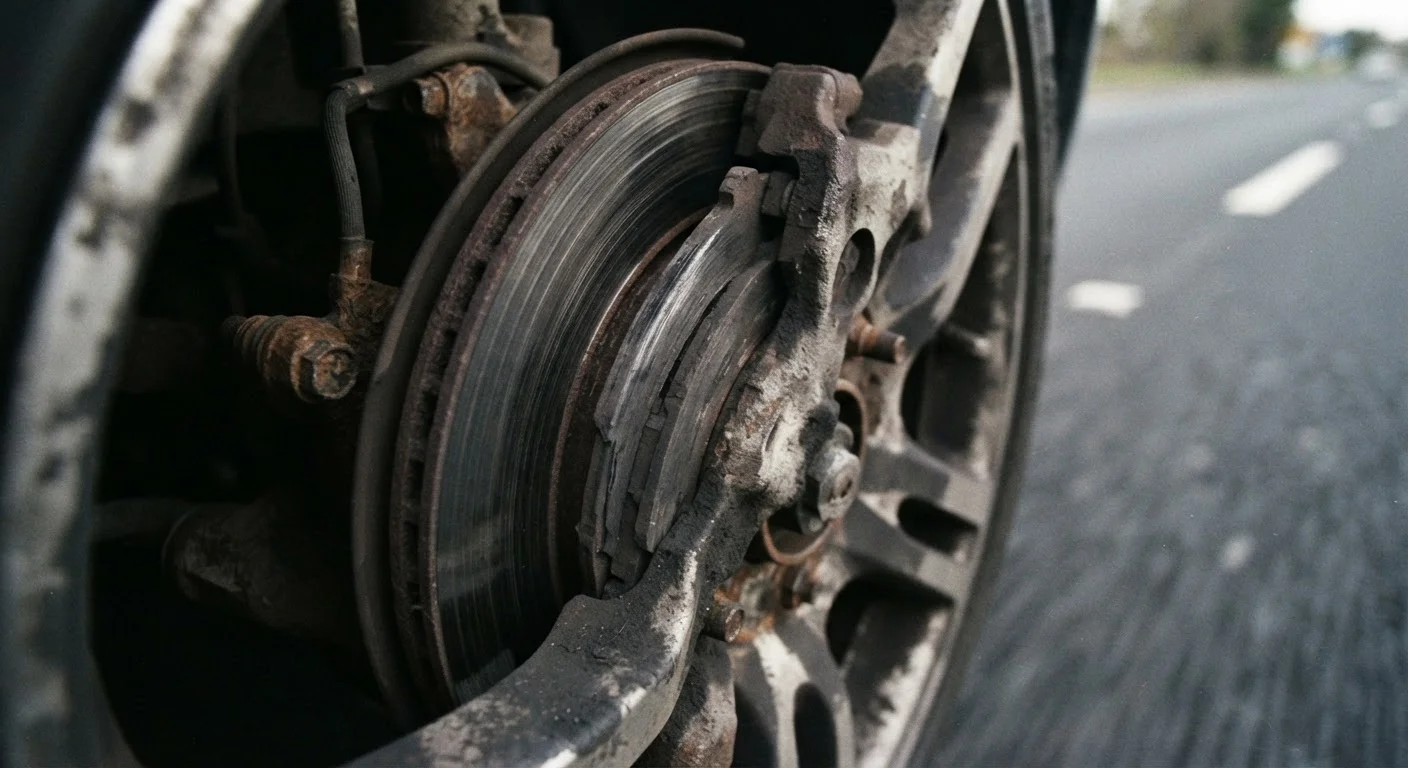
Cars are systems - each part depends on others working correctly. When one component begins to fail, it puts extra stress on connected parts. A worn brake pad, for example, doesn't just stop working on its own; left long enough, it grinds through the rotor, turning a $30-$60 pad replacement into a $200-$400 rotor job. That's deferred maintenance at work: the cost doesn't stay flat, it multiplies.
The same dynamic applies across almost every system in a vehicle. Low coolant levels can allow an engine to overheat, warping cylinder heads. A slow oil leak that goes unaddressed can eventually starve the engine of lubrication - one of the most expensive failure modes a car can experience. Understanding this compounding effect is the first step toward smarter ownership. See our plain-language maintenance overview for a full breakdown of what routine upkeep involves.
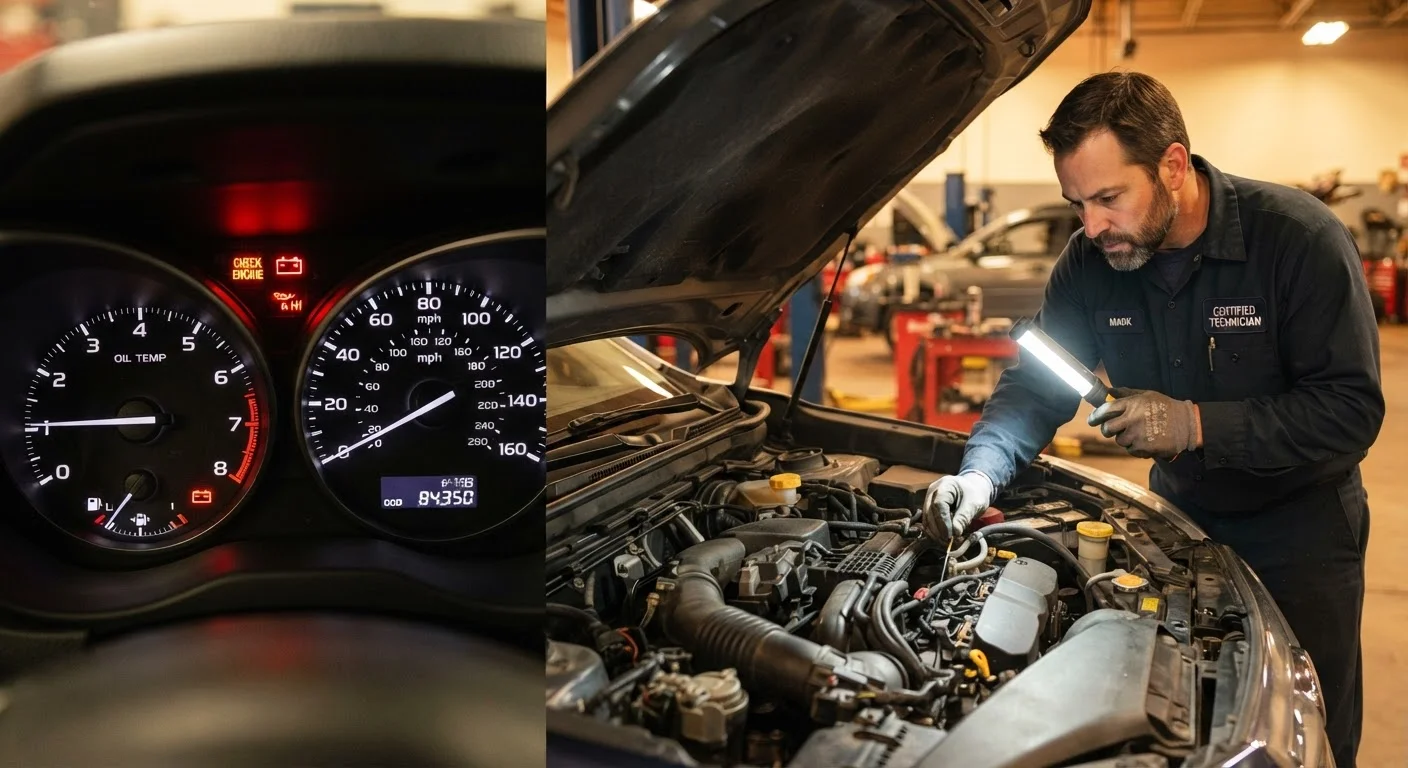
Ignoring dashboard warning lights until the car shows obvious symptoms.
Why it happens: Warning lights can stay on for days or weeks without the car seeming to drive differently, making it easy to assume nothing is seriously wrong.
Delaying an oil change because the car still seems to run fine.
Why it happens: Engine degradation from old oil is invisible and gradual - there's no dramatic symptom until serious damage has already occurred.
Putting off a brake inspection after noticing squeaking or a longer stopping distance.
Why it happens: Intermittent brake noise is easy to rationalize away, especially if it disappears in different weather conditions.
Topping off low fluids without investigating why they're low.
Why it happens: Adding coolant or oil feels like a fix, and it restores short-term function - so many drivers stop there.
Continuing to drive on a slow tire leak or visibly low tire pressure.
Why it happens: A slow leak can feel manageable when re-inflating takes just a few minutes at the gas station, making it seem like a minor inconvenience rather than a real hazard.
The Real Cost of Waiting
~$792
Average annual cost of deferred vehicle maintenance per car
Research from AAA has consistently found that American drivers pay hundreds of dollars more annually when routine maintenance is skipped versus kept current.
10x
Potential cost multiplier when minor repairs are ignored
Industry repair data frequently shows that a $50-$100 fix - such as a worn belt or brake pad - can escalate to $500-$1,000+ in secondary damage if left unaddressed.
It can be tempting to delay a repair when money is tight or when a symptom seems minor. But in most cases, the math works against waiting. A small oil leak addressed early might cost $100-$200 to fix a worn seal. Let it continue for several thousand miles and you risk engine damage that runs $3,000 or more - or triggers a total engine replacement. The real costs of car ownership extend well beyond fuel and insurance when deferred maintenance enters the picture.
Driving habits also play a role in how fast issues compound. Hard braking and rapid acceleration accelerate wear on brake pads, tires, and drivetrain components. Our companion article on aggressive driving and mechanical wear explains exactly how everyday habits speed up deterioration.
Don't Confuse "Running Fine" With "No Problem"
Many developing mechanical issues - oil leaks, worn belts, low brake fluid - produce no obvious driving sensation until failure is imminent. A car that starts and moves does not necessarily have no problems; it may simply have problems that haven't become catastrophic yet. Regular visual checks and scheduled inspections catch what your senses can't.
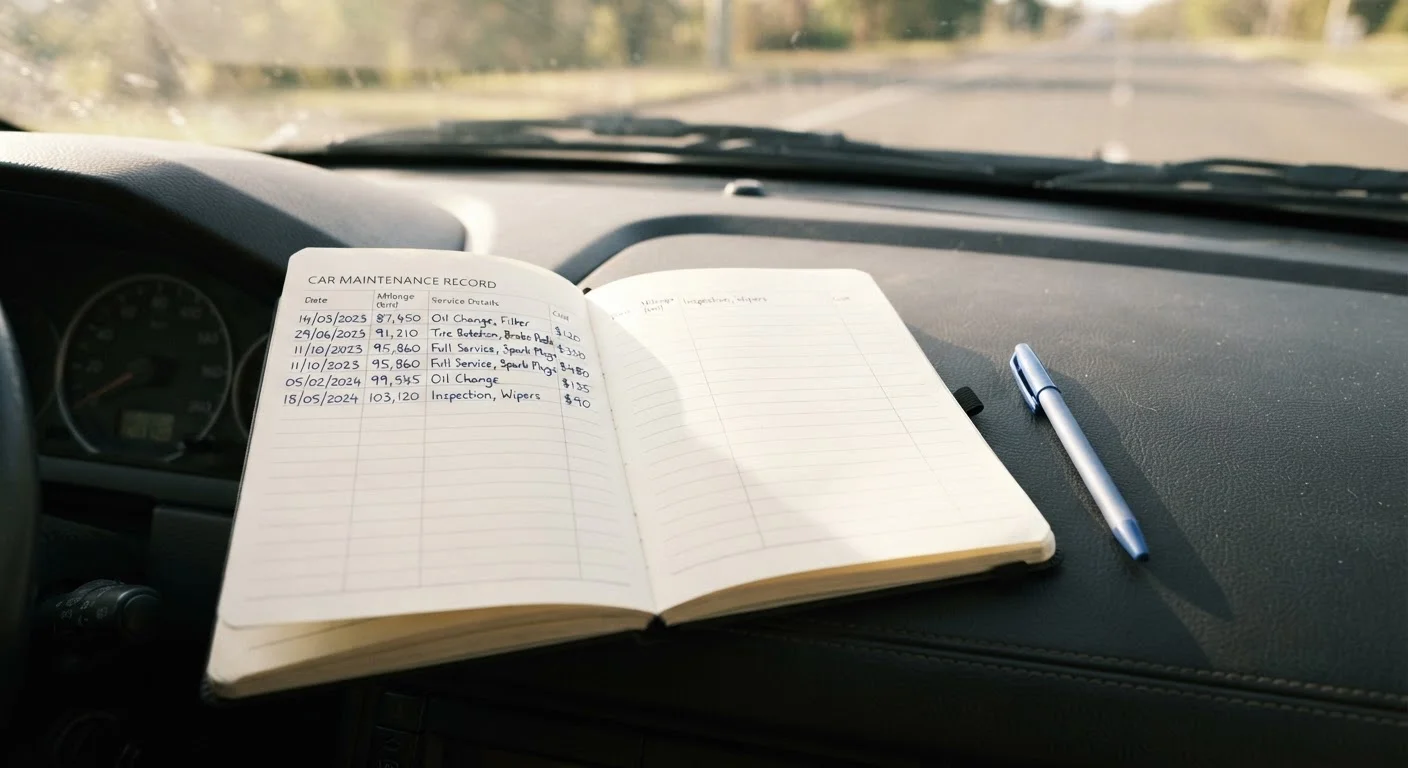
One practical defense: start a maintenance log. Recording every oil change, tire rotation, and repair - along with the mileage - gives you an early warning system for patterns and keeps service intervals from slipping. Our guide on keeping a car maintenance log shows how to set one up in minutes. You can also explore habits that accelerate vehicle wear to identify what to stop doing today.