Why Weather Conditions Demand More Than Just Slowing Down
Most new drivers understand that wet or icy roads are dangerous, but fewer understand exactly why - or what changes inside the vehicle need to happen in response. Road grip, also called traction, is the friction between your tyres and the road surface. Water, ice, and fog each reduce traction or visibility in distinct ways, and each requires a different set of adjustments.
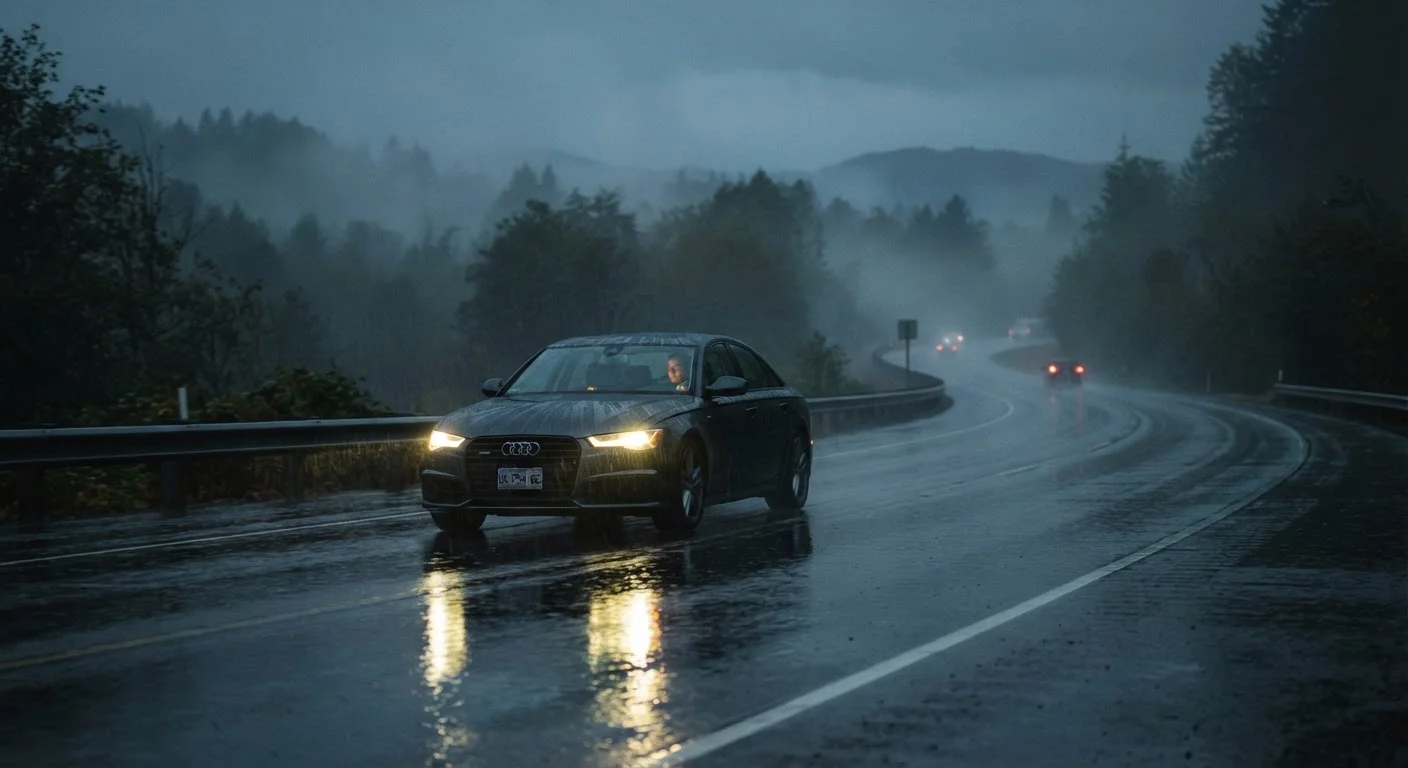
Rain creates a film of water between tyre and road. At higher speeds this can cause hydroplaning - where the tyre rides on the water rather than the road surface, making steering and braking temporarily ineffective. Ice reduces friction to a tiny fraction of what dry asphalt offers. Fog does not affect the road surface but collapses your ability to see and be seen, compressing your reaction time to almost nothing.
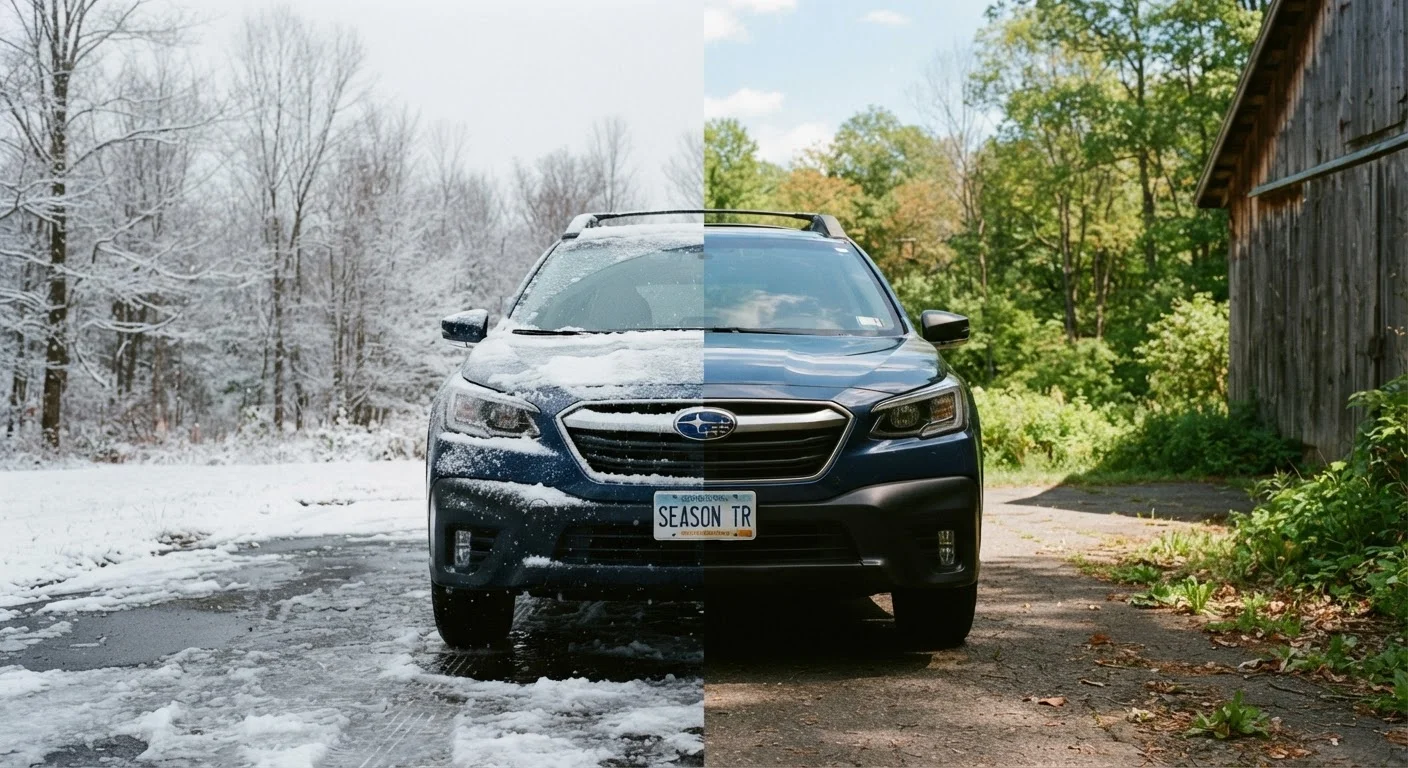
Before tackling adverse conditions, make sure your vehicle is prepared. Tyre tread, wiper blades, and lights all degrade gradually - problems that are invisible in dry daylight become critical in a storm. The seasonal car check guide covers what to inspect and how often.
What you will need
Step-by-Step: Adapting Your Driving to the Conditions
The steps below apply to the most common adverse driving conditions in the US - rain, ice, and fog. Work through them as a mental checklist any time the weather changes while you're driving or before you set out.
Prepare Your Car Before Bad Weather Hits
Weather conditions can change quickly, especially in transitional seasons. Running through a pre-drive check - tyres, lights, wipers, and fluids - gives you more options when conditions deteriorate. See the seasonal car check guide for a full inspection list.
Recognize the condition before you start moving
Before pulling out, spend 60 seconds reading the environment. Look at the road surface under streetlights or daylight: a wet sheen means reduced grip; a dull, matte-gray patch on an otherwise wet surface near freezing temperatures often signals black ice - nearly invisible frozen water that provides almost no traction.
Check the temperature display in your car. At or below 37°F (3°C), bridges, overpasses, and shaded spots can be frozen even when the rest of the road appears clear.
Adjust your following distance immediately
The standard three-second following distance is designed for dry roads. In rain, extend this to at least six seconds. On ice or snow, ten seconds or more is a reasonable minimum. To measure it, pick a fixed landmark and count the seconds between when the car ahead passes it and when you do.
Increased following distance gives you time to react and brake gradually - sudden hard braking on low-grip surfaces is one of the leading causes of skids.
Reduce speed below posted limits when warranted
Speed limits reflect safe speeds in ideal, dry conditions. In rain, a road that feels manageable at 55 mph may require 40 mph to maintain safe stopping distances. On ice, even 20 mph can be dangerously fast on certain surfaces.
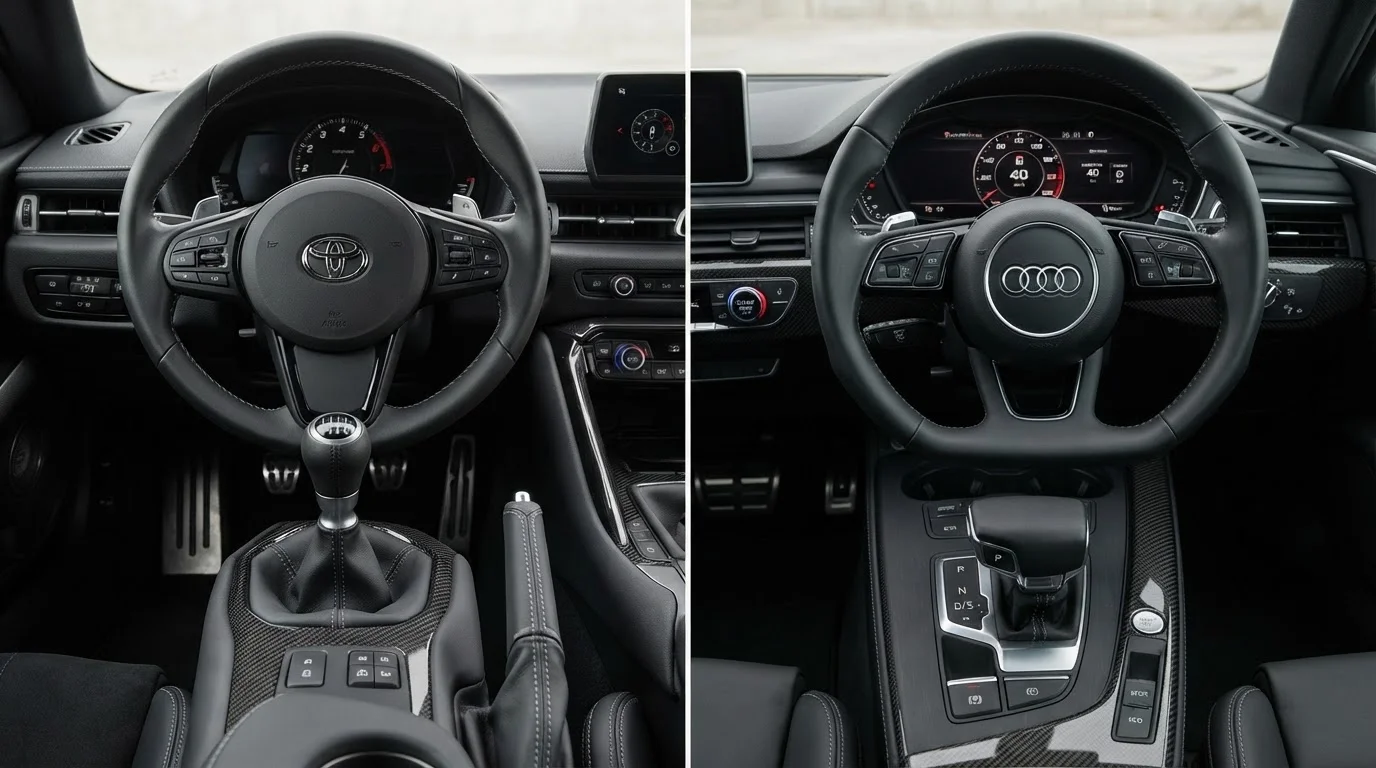
Use engine braking - gradually releasing the accelerator rather than applying the brake - to slow smoothly, especially on descents in slippery conditions. This approach is particularly useful in manual transmission vehicles; the transmission and road conditions guide explains how your gearbox type affects this.
Set your lights correctly for each condition
Rain: Turn on your headlights even during daytime rain - it helps other drivers see you, and in many states it is legally required when wipers are in use.
Fog: Use low beams, not high beams. High beams reflect off water droplets in the fog and create glare that reduces your own visibility. If your car has dedicated front fog lights, use them. Rear fog lights, if equipped, help following drivers see you - but turn them off once visibility improves, as they can dazzle drivers behind you.
Ice and snow: Keep lights on and clean. Snow can accumulate on lenses and dramatically reduce output.
Use smooth, deliberate inputs throughout
On any low-grip surface, abrupt actions - hard braking, sharp steering, sudden acceleration - transfer weight violently between tyres and break traction. Instead, apply every control input gradually:
- Braking: Begin braking earlier and press the pedal progressively. If your car has ABS (Anti-lock Braking System - standard on most vehicles built after 2000), apply firm, steady pressure and let the system pulse the brakes for you. You may feel vibration through the pedal; this is normal.
- Steering: Look well ahead and make gentle, measured turns. Avoid jerky corrections.
- Accelerating: Ease onto the throttle from a stop to prevent wheel spin, especially on ice.
Know when to pull over or delay the journey
There are conditions where the safest decision is not to drive at all. If visibility drops below a safe threshold in dense fog or a whiteout, put on your hazard lights and pull completely off the road - ideally at a rest stop or parking lot, never on the shoulder of a highway if avoidable.
Before any journey in marginal weather, check road condition reports from your state's department of transportation and weather services. Delaying a trip by even one hour after freezing rain often means significantly safer roads. See the pre-drive checklist for a full preparation routine before setting out.
If You Lose Control: Do Not Panic-Brake
If your car begins to skid - whether on ice or a wet surface - resist the urge to slam the brakes or yank the wheel. Ease off the accelerator, look and steer gently toward where you want to go, and let the car recover traction gradually. Overcorrecting is one of the most common causes of spin-outs.
Common Mistakes That Amplify Risk
Even careful drivers fall into predictable habits that raise their risk in poor conditions. Understanding these patterns can help you avoid them:
Never Assume You Can See Far Enough
In fog or heavy rain, visibility can shrink to under 100 feet in seconds. If you cannot stop within the distance you can see, you are driving too fast for the conditions. Many serious collisions in poor weather happen to drivers who believed they were being cautious.
- Using cruise control in rain or on ice: If a wheel loses grip, cruise control may try to maintain speed by accelerating - the opposite of what you need. Turn it off whenever the road surface is wet, icy, or unpredictable.
- Driving with a dirty windshield in bright post-rain light: Water streaks and grime scatter sunlight and oncoming headlights, reducing visibility severely. Keep washer fluid topped up and your wiper blades in good shape.
- Overconfidence with all-wheel drive (AWD): AWD helps you accelerate on slippery surfaces, but it does not improve braking or cornering grip. Drivers with AWD vehicles sometimes take corners too fast on ice believing their vehicle handles differently than it does.
- Ignoring the onset of aquaplaning: A sudden lightness in the steering wheel in heavy rain is a warning sign. Ease off the throttle gently, keep the wheel straight, and allow the car to slow naturally until you feel grip return.
Understanding your transmission type also matters in difficult conditions. If you drive a manual, the transmission control guide explains how gear selection affects stability on wet or icy roads.