Why a Thoughtful Kit Beats a Bulky One
Most commercial travel first aid kits sold in stores are loaded with items you'll almost certainly never use - multiple triangular bandages, instant cold packs, and CPR face shields - while skipping practical everyday needs like blister pads or ORS packets. The goal isn't to pack for every possible scenario; it's to handle the common ones and buy yourself time for the serious ones.
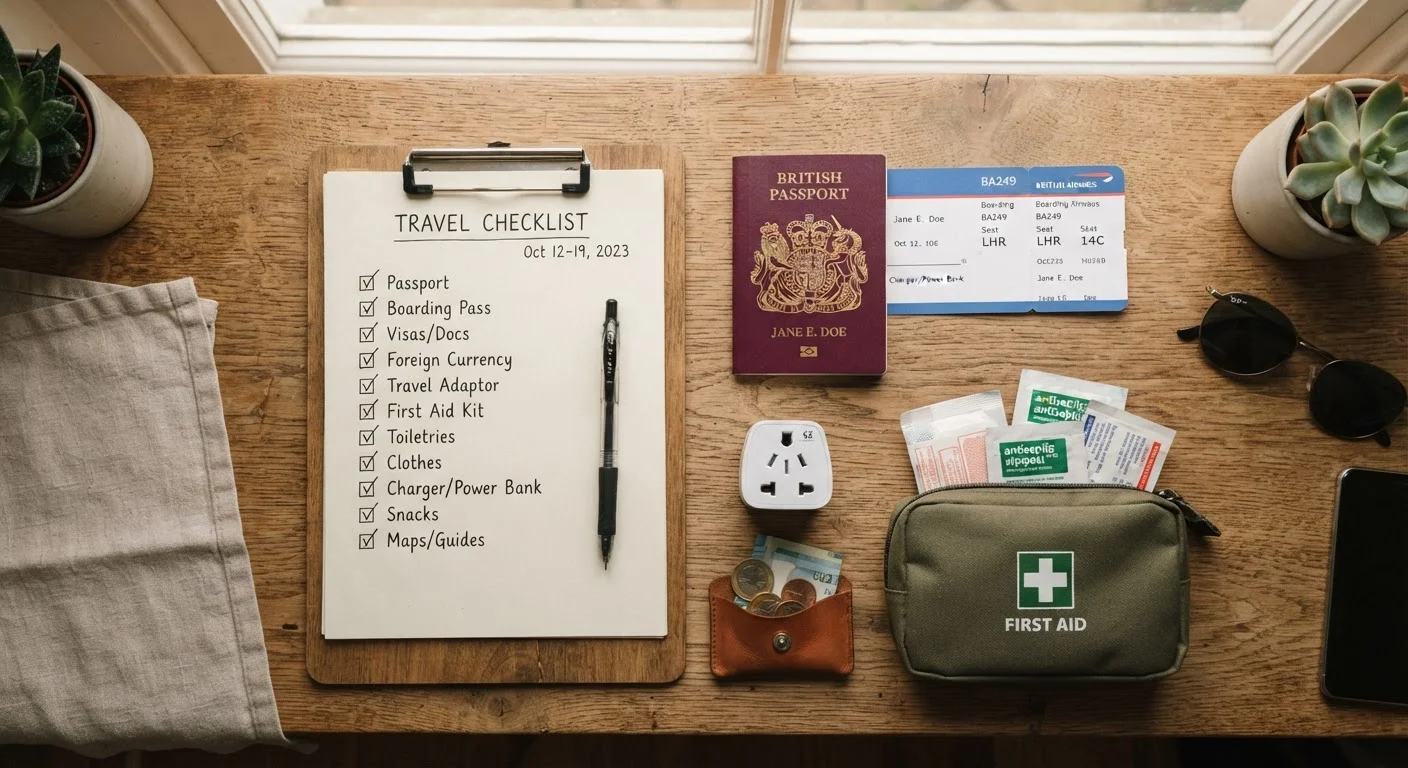
If you're working through your broader trip preparation, the pre-trip checklist covers health prep alongside other essentials like travel insurance - worth reviewing before you finalize your kit.
Build for Your Trip, Not Every Trip
A beach week in Mexico needs different supplies than a two-week hike in Southeast Asia. Before packing anything, write down your destination's climate, your planned activities, and how far you'll be from medical facilities. That list should drive every item you include.
Before assembling anything, go through the prerequisites below to make sure you have the right context for your specific trip.
What you will need
What to Pack: Tools and Supplies
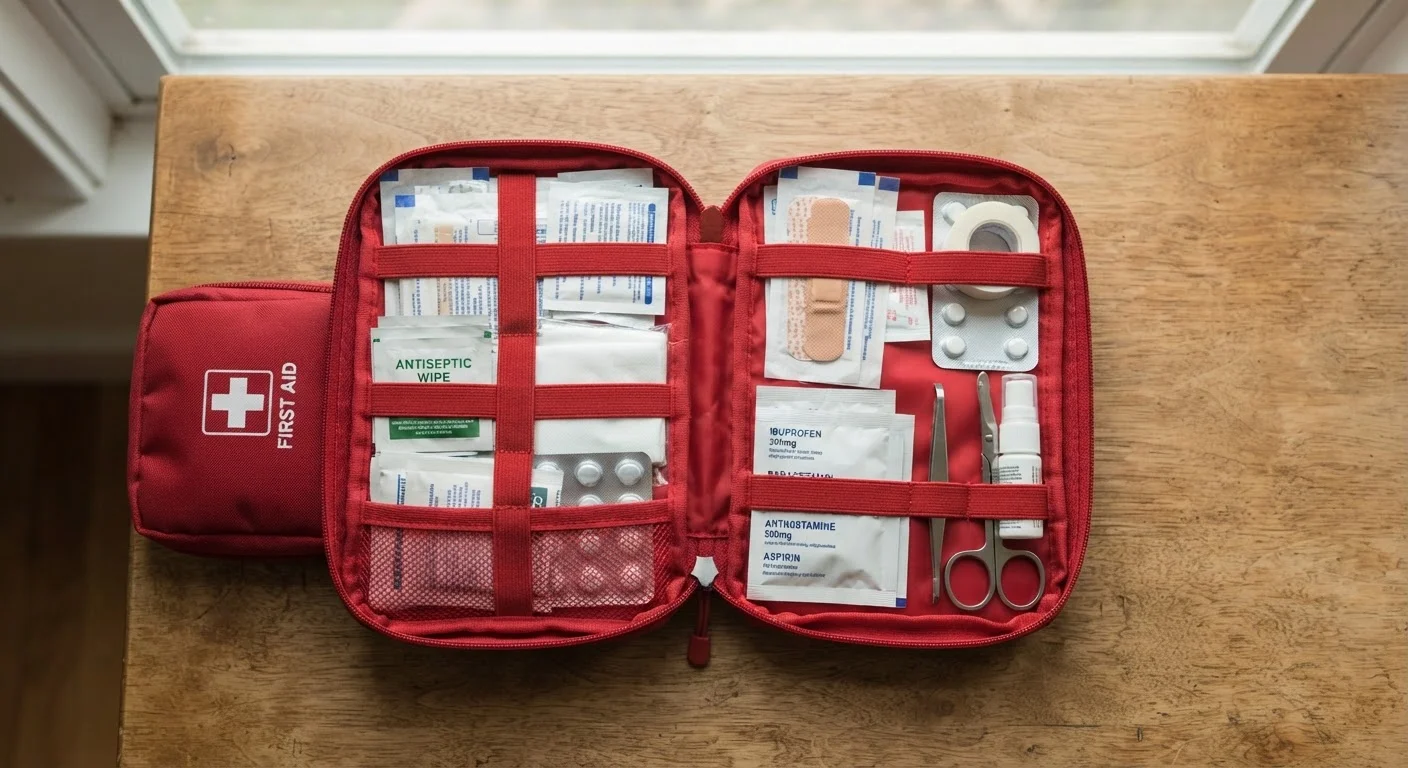
The supplies below form the practical core of a useful travel first aid kit. Review the tool list, then follow the steps to build yours systematically rather than grabbing items at random.
Small zippered pouch or hard-shell case
Keeps all kit items organized, visible, and protected from moisture.
Adhesive bandages (multiple sizes)
Covers cuts and abrasions - the most common travel injury.
Blister pads or moleskin
Prevents and treats blisters from walking in new shoes or terrain.
Antiseptic wipes or small bottle of antiseptic solution
Cleans wounds before bandaging to reduce infection risk.
Over-the-counter pain reliever
Addresses headaches, mild fever, or muscle soreness. Choose the formulation appropriate for you.
Antidiarrheal tablets
Manages traveler's diarrhea symptoms when rest and access to facilities are limited.
Oral rehydration salts (ORS) packets
Replaces fluids and electrolytes lost to illness or heat - especially important in hot or remote destinations.
Prescription medications (personal)
Any condition-specific medications you already take, with sufficient supply plus a few extra days.
Assess your destination and activities
Before buying a single item, answer three questions: How remote will you be? What's the climate? What activities are planned? A city break in Western Europe puts you close to pharmacies and clinics. A trekking trip in a rural region does not. Your kit's depth should match your distance from help.
Start with wound care basics
Cuts, blisters, and scrapes are the most frequent minor travel injuries. Pack adhesive bandages in at least two sizes, gauze pads, medical tape, antiseptic wipes, and blister pads. This small cluster of supplies handles the majority of day-to-day incidents.
Add digestive and hydration support
Traveler's diarrhea affects a significant portion of international travelers each year. Include antidiarrheal tablets and at least four to six oral rehydration salts (ORS) packets. ORS is widely recommended for managing dehydration from diarrhea or heat exposure and is inexpensive and lightweight.
Include a pain reliever and fever reducer
A general-purpose over-the-counter pain reliever handles headaches, mild fever, and muscle soreness - all common travel complaints. Choose whichever formulation is appropriate for your health profile; if you're unsure, consult a pharmacist or doctor before your trip. Pack enough for the duration, plus a few extra doses.
Pack your prescription medications with documentation
Bring all personal prescription medications in their original labeled containers. Carry a letter from your prescribing doctor describing each medication, its dosage, and the medical reason for it. This documentation is particularly important at customs in countries with strict drug import regulations. Pack medications in your carry-on, not checked luggage, in case bags are delayed or lost.
Add destination-specific items
Tailor the final layer of your kit to your actual trip. Tropical or outdoor destinations may call for insect repellent and after-bite treatment. High-altitude destinations may warrant altitude sickness medication - discuss this with a doctor in advance. If you're traveling somewhere with strong sun exposure, include a quality sunscreen. Keep this layer lean: only add what addresses a realistic risk for your specific itinerary.
Review for carry-on compliance and pack it in
Go through every liquid in your kit and confirm it meets TSA's 3-1-1 rule (containers of 3.4 oz or less, in one quart-sized clear bag). Check that any sharp items - scissors, safety pins, lancets - comply with airline rules or move them to checked luggage. Once compliant, pack the kit in an easily accessible part of your bag, not buried at the bottom.
This Is Not Medical Advice
This article provides general information for educational purposes only. It is not a substitute for professional medical advice, diagnosis, or treatment. Always consult a qualified healthcare provider before travel - especially for vaccinations, prescription medications, or if you have an existing health condition.
What to Leave Out - and When to Seek Real Help
Dead weight in a travel kit is a real problem: it makes the bag heavier and makes finding what you actually need harder. Skip bulky elastic bandages unless you have a known joint condition, skip large quantities of gauze rolls, and skip any item whose use you couldn't confidently explain. A kit you understand is safer than a comprehensive one you don't.
More importantly, know the limits of what a first aid kit can do. It manages minor issues. Symptoms like persistent high fever, chest pain, difficulty breathing, signs of severe allergic reaction, deep or heavily bleeding wounds, or suspected fractures all require professional medical care - not self-treatment. Your travel insurance should include emergency medical coverage; confirm this before you leave. For more on staying safe overall, travel safety for first-timers is a solid grounding resource.
Carry-On Restrictions Apply
Liquids over 3.4 oz (100ml) are generally not allowed in carry-on bags under TSA rules, and sharp items like scissors or needles may be flagged. Pack liquids in compliant sizes and check current TSA and airline guidelines before you fly. Rules can vary for international carriers.
For budget-conscious travelers, building your own kit is generally more cost-effective than buying a pre-made one - you pay only for what you'll actually use. If this is part of a broader budget travel plan, planning your first budget trip abroad walks through how to manage costs across every part of your trip.
This article is for informational purposes only and does not constitute medical advice. Consult a qualified healthcare professional for guidance specific to your health needs and travel destination.