Why a Pre-Trip Checklist Actually Matters
Most travel headaches aren't caused by bad luck - they're caused by skipped steps. A forgotten passport photo, a card that gets flagged as suspicious, a visa requirement nobody looked up until the airport. The good news is that nearly all of these problems are preventable with a structured run-through before you leave.
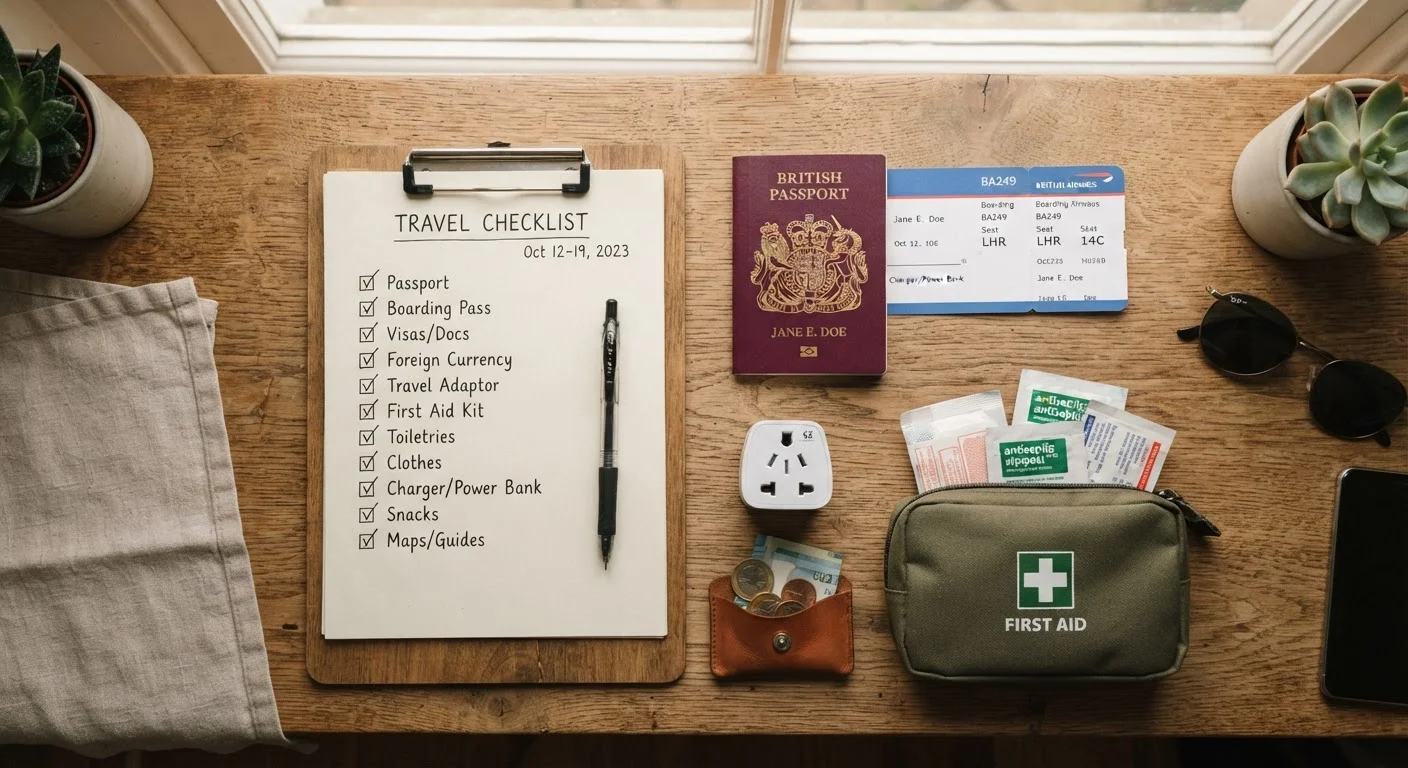
This checklist is designed for travellers who want to feel genuinely ready, not just packed. Whether it's your first trip abroad or you've done this a few times and want a reliable system, working through each group below will surface anything that needs your attention while you still have time to act. If you're starting from scratch on your planning, the complete trip planning walkthrough covers the broader process from destination research to packing.
Work through this checklist ideally one to two weeks before departure - not the night before.
Documents & Entry Requirements
Health & Medical Preparation
Money & Banking
Insurance & Safety
Logistics & Connectivity
Tools Worth Having Handy
You don't need much to run through this checklist, but a few resources will make it faster and more thorough.
Your government's official travel advisory site
Verify visa requirements, current entry rules, safety advisories, and traveller registration programmes for your specific destination.
Destination country's official embassy or consulate website
Confirm visa applications, entry requirements, and any documentation your nationality requires.
Travel medicine clinic or your primary care provider
Get destination-specific vaccination recommendations and advice on prescription medication rules before you travel.
Offline maps app (downloaded before departure)
Navigate your destination without relying on mobile data, especially useful on arrival or in areas with poor connectivity.
Printed or offline document copies
Access your passport copy, insurance policy, itinerary, and booking confirmations even without phone access or battery.
A Few Things Worth Double-Checking
Even experienced travellers make assumptions that cost them. Visa-on-arrival programmes change without much notice. Travel insurance policies often exclude adventure activities or pre-existing conditions by default - it's worth understanding what travel insurance actually covers before you assume you're protected. And if you carry prescription medications, crossing borders involves legal complexity that varies by country - see what travellers should know about prescription medications abroad for general principles.
Entry Requirements Change - Always Verify Officially
Visa rules, health entry requirements, and border policies can change with little advance notice. Never rely on travel blogs, forums, or even this checklist as your final source. Always verify current requirements directly with the official embassy, consulate, or your government's foreign travel advisory portal before departure. Getting this wrong can mean being denied boarding or entry.
For anything health-related - vaccinations, medications, medical history - give yourself at least four to six weeks before departure, since some vaccines require that lead time. General guidance on the health side is covered in travel health preparation. For a budget-focused angle on departure-day prep, the pre-departure checklist for cost-conscious travellers covers the small oversights that quietly drain money.
Don't Leave Insurance to the Last Minute
Travel insurance typically needs to be purchased before a trip disruption or health event occurs to cover it. Buying a policy the night before departure may exclude issues that arose during the booking period. Review your policy's terms carefully, and if you're uncertain about coverage - particularly for pre-existing conditions or specific activities - contact the insurer directly rather than assuming you're covered.
This article provides general travel planning information only. For health, medical, legal, or entry-requirement decisions, always consult a qualified professional and verify current rules with official government or embassy sources before travelling.