Why This Decision Matters More Than It Seems
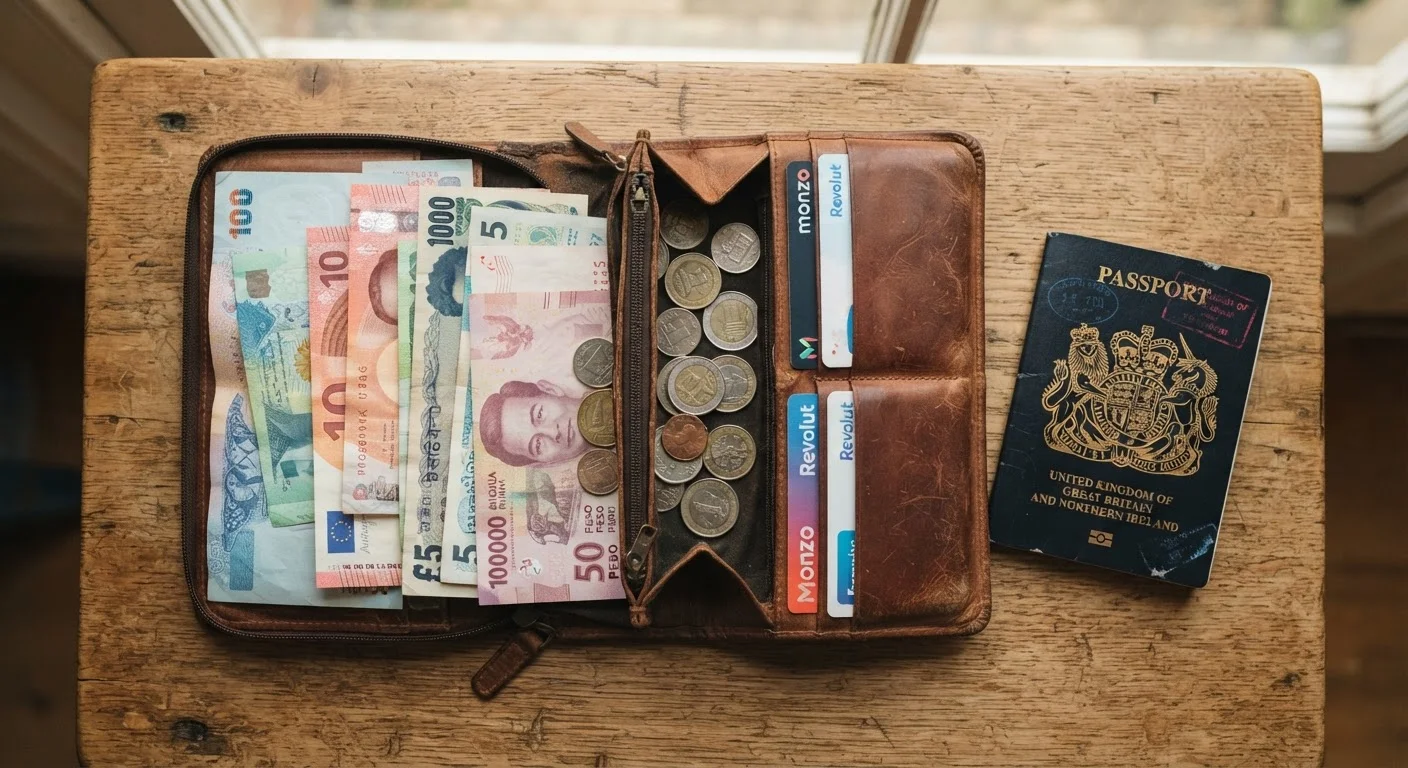
Most first-time international travelers pack a card and assume it will work everywhere - until it doesn't. A blocked card at a foreign ATM, a restaurant that only takes cash, or a skimmed chip can each turn into a real crisis if you have no backup. On the other side, walking around with a thick envelope of foreign currency in your pocket creates its own set of risks.
The right answer isn't one or the other - it's a considered mix based on where you're going and what could go wrong. Before you finalize your payment strategy, it's worth reading up on your destination's currency norms and general safety picture. Our guide on what to research before you land covers how to approach that groundwork.
The Case for Cash - and Its Risks
Cash works without a network connection, a functioning card terminal, or bank approval. In rural areas, local markets, small guesthouses, and many regions across Southeast Asia, Latin America, and parts of Africa, cash is the only reliable option. It also lets you control spending without worrying about foreign transaction fees on small purchases.
Universally accepted, no network required
Cash works in power outages, remote areas, and markets that have never accepted cards. In many countries, small vendors and local transport only deal in physical currency.
No fraud trail to steal or block
Unlike card data, cash can't be skimmed or digitally compromised. Once you have local currency in hand, it doesn't depend on any bank system staying functional.
Easier to budget and pace spending
Handing over physical money creates a tangible sense of what you're spending, which can help travelers stick to a daily budget more intuitively than tapping a card.
That said, cash carries real physical risk. If stolen, it's gone with no recourse - no fraud department to call, no chargeback. Carrying large amounts increases your exposure significantly. Pickpockets in busy transit hubs and tourist areas specifically target travelers who visibly handle cash. The practical rule: carry only what you expect to spend in a day or two, and keep emergency reserves in a separate location - a money belt, locked bag, or hotel safe.
For guidance on minimizing what you lose to exchange rates and ATM fees when you do carry cash, see our piece on carrying cash abroad without losing money to fees.
The Case for Cards - and Their Vulnerabilities
Payment cards - particularly credit cards - offer something cash never can: a dispute process. If a card is skimmed or a fraudulent charge appears, most issuers provide zero-liability protection and can reverse charges. Credit cards also generally offer better exchange rates than currency booths and don't require you to carry physical bills.
No recovery if lost or stolen
Cash theft or loss has no reversal mechanism - there's no fraud team to call and no transaction record to dispute. The money is simply gone.
Cards can be frozen without prior notice
Banks routinely flag foreign transactions as suspicious and freeze accounts automatically. Without prior notification, travelers can find themselves locked out of funds at the worst moment.
ATM skimming is a real and common risk
Skimming devices attached to ATMs - common in high-traffic tourist zones globally - can capture card and PIN data without leaving any visible sign of tampering.
A single card lost means potential days without access
Emergency card replacement typically takes several business days even with express shipping, leaving travelers reliant on cash or help from others in the interim.
But cards fail in ways cash doesn't. Banks can freeze accounts when unfamiliar foreign charges trigger fraud alerts, especially if you haven't notified them of your travel plans before departure. Card terminals may be down, connection-dependent, or simply absent. Skimming devices on ATMs - particularly in tourist-heavy areas - can capture card data without you knowing until after the fact. And if your only card is lost or stolen, you may be days away from a replacement. Carrying two separate cards from different networks (and keeping them in different places) is the most practical safeguard.
Digital threats extend beyond physical card theft - our article on digital safety while traveling covers how to protect payment apps and banking data on the road.
80%+
Global card fraud involving counterfeit or skimmed data
A significant share of card fraud internationally involves skimmed card data rather than lost or stolen physical cards, according to payment industry reports.
1 in 3
Travelers who experience a blocked card abroad
Travel consumer surveys consistently find that a substantial proportion of international travelers encounter a card block or decline at some point during a trip due to fraud detection triggers.
Building a Practical Payment Strategy
Before departure, take three concrete steps: notify your bank of your travel dates and destinations, confirm your card works on the local networks (Visa and Mastercard have the broadest global reach), and identify where ATMs are in your destination area. Withdrawing a moderate amount of local currency at an airport ATM upon arrival - not from a currency exchange kiosk - is typically the most practical starting point.
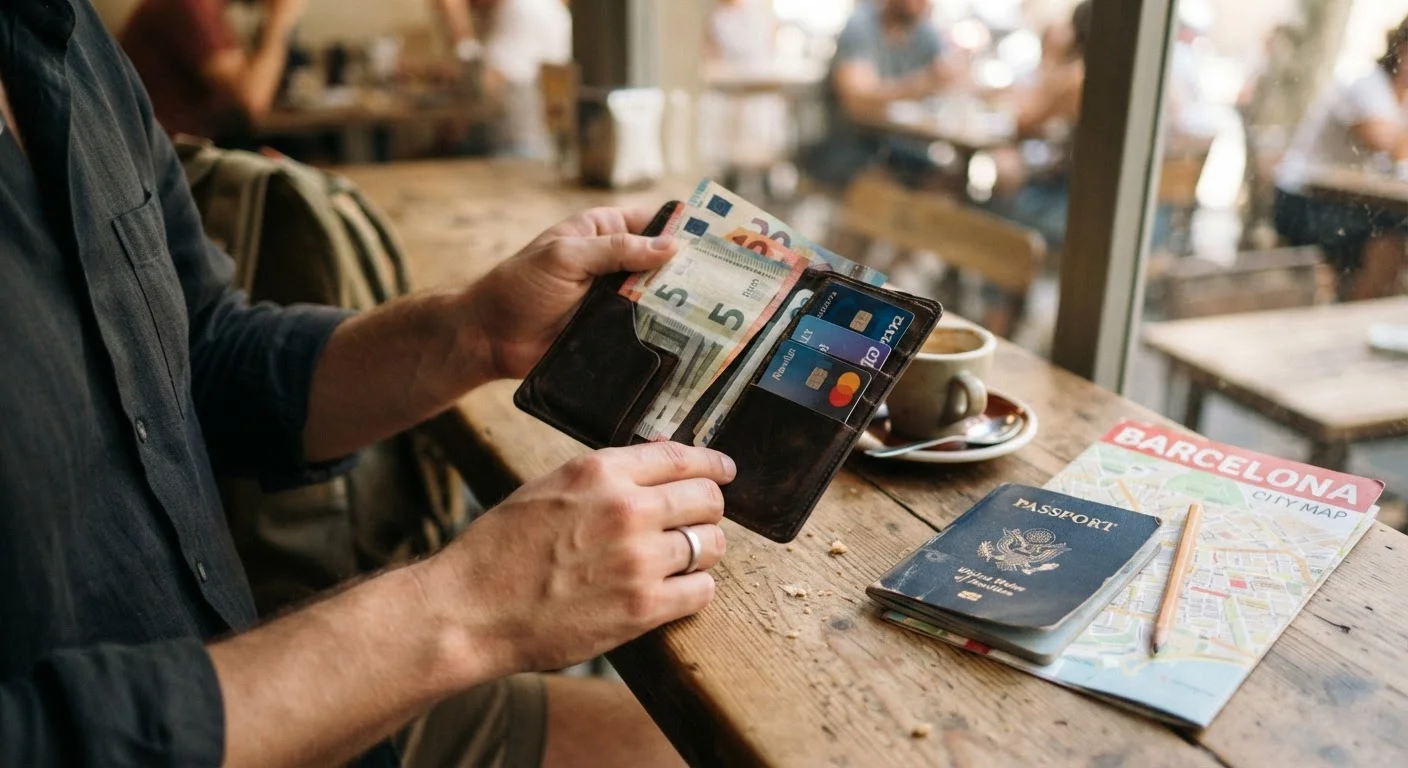
A rough framework that works for many travelers: use cards for hotels, larger restaurants, and transport bookings where card acceptance is reliable and fraud protection matters most. Use cash for street food, small shops, local transit, and any setting where handing over a card feels uncertain. Keep your daily cash carry modest and your emergency cash stash separate and hidden.
Understanding the broader differences between credit and debit cards also matters - they're not interchangeable in terms of protection or how they interact with your finances. Our explainer on credit cards vs. debit cards is worth a read before you decide which to rely on abroad.
Splitting Risk Between Card Types
Credit cards and debit cards carry different liability rules under U.S. consumer protection law. Credit cards generally offer stronger zero-liability protections on fraudulent charges than debit cards, where disputed transactions interact directly with your bank balance. When choosing which card to carry abroad, understanding these distinctions matters - and carrying one of each gives you both flexibility and layered protection.
For a broader pre-trip financial checklist, including when to notify your bank and what documents to carry copies of, see our pre-departure checklist for budget-conscious travelers.