What You're Actually Looking At
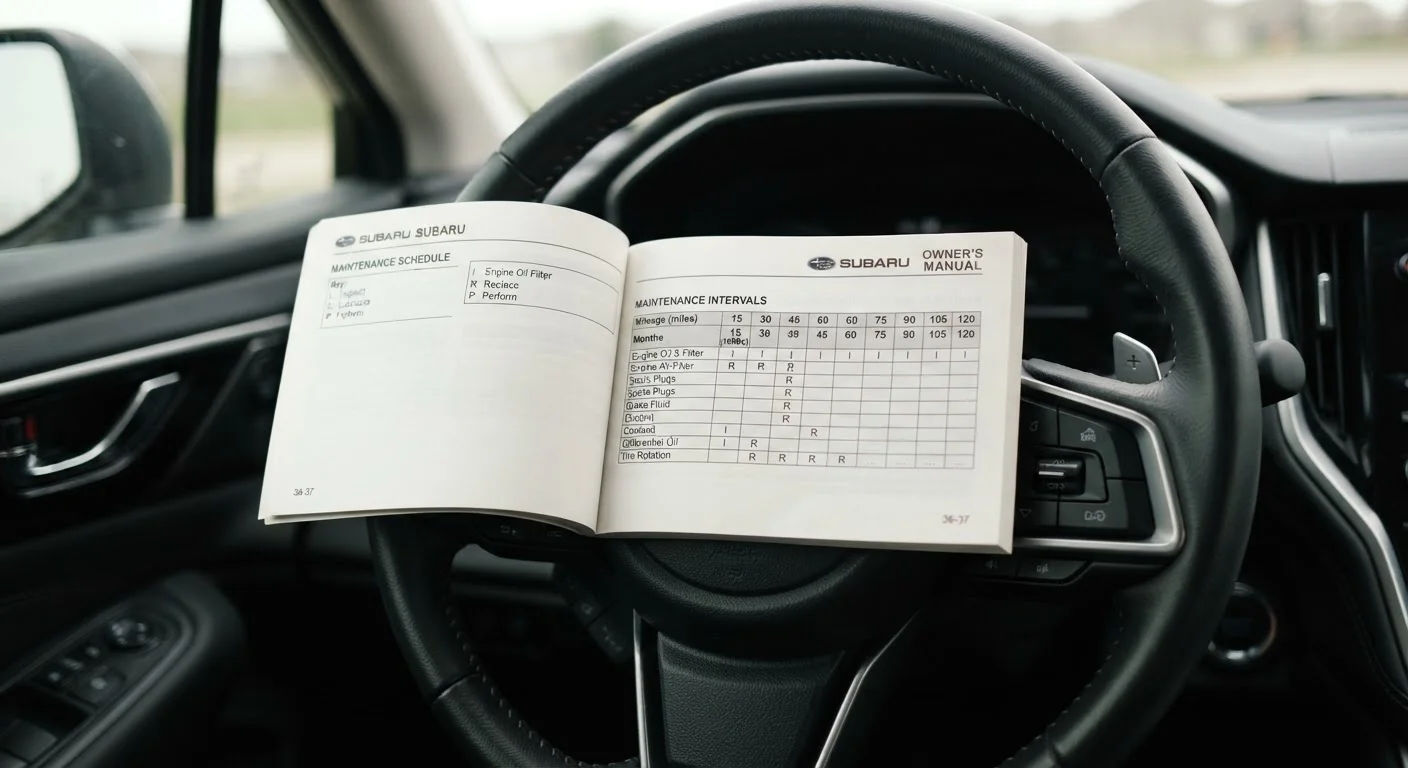
Flip to the maintenance section of your owner's manual and you will typically find a table or chart with rows of services - oil change, tire rotation, cabin air filter, spark plugs - and columns marked with mileage milestones like 5,000, 15,000, 30,000, and 60,000 miles. Some schedules also list time intervals in months alongside the mileage figures.
Each checkmark or bullet in the table means that service is recommended at that interval. The key phrase to notice is 'whichever comes first' - if an interval lists both miles and months, the one you reach earliest triggers the service, not the later one. A driver who doesn't put many miles on a car still needs time-based services because fluids degrade and rubber components age whether or not the vehicle moves much.
This is general financial education, not personalized advice - for decisions about your specific car and budget, consult a qualified mechanic you trust. See our overview of car ownership costs to understand how maintenance fits into your total vehicle budget.
2-track
Service schedule formats in most owner's manuals
Nearly all modern vehicle owner's manuals include separate Normal and Severe driving condition schedules, requiring drivers to identify which applies to their habits.
~35%
Of drivers who don't consult their owner's manual regularly
Industry surveys consistently find that a significant share of drivers rely on a shop's recommendation rather than their manufacturer's schedule to decide when services are needed.
60,000+
Miles before some major services are due
On modern vehicles, components like spark plugs and timing belts often have much longer intervals than older cars, making the specific manufacturer schedule especially important to reference.
The Two Condition Tracks - and Which One Applies to You
Most schedules include two columns or separate tables: one for Normal driving conditions and one for Severe conditions. Severe intervals are shorter - meaning more frequent service - because the vehicle works harder and fluids break down faster.
Severe conditions are not just for off-road adventurers. The following situations typically qualify:
- Frequent trips shorter than five miles
- Driving in extreme heat (above 90°F regularly) or extreme cold
- Stop-and-go city commuting that makes up most of your driving
- Towing a trailer or carrying heavy loads
- Dusty or unpaved road driving
If several of those describe your typical week, use the Severe schedule. Urban commuters are often surprised to find they fall into this category. The real story behind oil change intervals explains why your specific driving pattern matters more than a single universal rule.
Quick Way to Find Your Condition Type
Turn to the 'Severe Conditions' definition in your owner's manual - it usually appears just before or after the maintenance table. Read every bullet point carefully and honestly assess your typical week of driving. If two or more conditions apply to you regularly, default to the Severe schedule to keep your vehicle properly protected.
Decoding Common Service Milestones
Service schedules follow a predictable rhythm once you recognize the pattern. Here's what typically appears at common milestones:
- Every 5,000-10,000 miles
- Oil and filter change, tire rotation, visual inspection of fluid levels and brakes.
- Every 15,000-30,000 miles
- Cabin and engine air filter replacement, brake inspection, battery check.
- Every 30,000-60,000 miles
- Transmission fluid, coolant flush, spark plug replacement (on most gasoline engines), fuel filter.
- Every 60,000-100,000+ miles
- Timing belt or timing chain inspection, brake fluid flush, major drivetrain service.
Not every car needs every one of these at the exact same mileage - that's why the manufacturer's specific schedule always takes priority over any generic list. For a deeper look at what individual fluids do and how to spot trouble, see car fluids explained simply.
Separating Manufacturer Requirements from Shop Upsells
When you bring a car in for a routine oil change, a shop may present a list of additional recommended services. Some of those recommendations are legitimate; others may be premature or unnecessary for your specific vehicle and mileage. The way to tell the difference is straightforward: compare every suggestion against your owner's manual schedule.
If a service isn't due according to the manual, ask the technician to explain why they believe it's needed now. A legitimate answer involves observable evidence - worn brake pads measured in millimeters, a fluid sample that's visibly dirty, or a cracked belt. A vague answer like 'it's a good idea at your mileage' without reference to a specific condition or measurement warrants a second opinion.
Talking to a mechanic with confidence walks through exactly how to ask these questions without feeling awkward or pressured. And once services are done, recording them helps you avoid duplicate work - keeping a maintenance log is simpler than it sounds and pays off at resale time.
Building a Simple Tracking System
You don't need an app or a spreadsheet to stay on top of your schedule - though both can help. The minimum viable system is a single piece of paper or a note on your phone that records three things after every service: the date, the mileage, and what was done.
From there, look ahead. If your oil was just changed at 42,000 miles and the next change is due at 49,500 miles, note that milestone somewhere visible - a sticky note on the dash, a calendar reminder, or a note in your phone. Do the same for the next bigger service interval so it never sneaks up on you unexpectedly.
For a broader picture of how maintenance costs fit alongside insurance, registration, and loan payments, our plain-language maintenance overview ties all the pieces together in one place.
This article is for general informational and educational purposes only. Always consult a qualified mechanic for guidance specific to your vehicle's condition and needs.