Why Running Costs Deserve as Much Attention as the Purchase Price
For most young adults, the sticker price of a car gets most of the attention - but the ongoing costs often exceed what was paid at the dealership within just a few years. Fuel, insurance, tires, oil changes, registration fees, and unexpected repairs stack up quickly. Understanding what car ownership actually costs per month is the first step; building habits that keep those costs as low as possible is the second.
The good news is that most cost-saving habits are free to adopt. They require consistency rather than cash, and the savings compound over time. This guide walks through the most impactful practices - grounded in how cars actually work - so you can make smarter daily decisions without sacrificing safety or reliability.
Drive Smoothly to Protect Fuel Economy and Mechanical Components
The single most controllable variable in your running costs is how you drive. Hard acceleration burns significantly more fuel than gradual speed increases. Harsh braking converts kinetic energy into heat and brake pad wear instead of using it efficiently. Tailgating forces constant speed fluctuations that compound both problems.
Accelerate gradually from a stop and anticipate traffic flow well ahead.
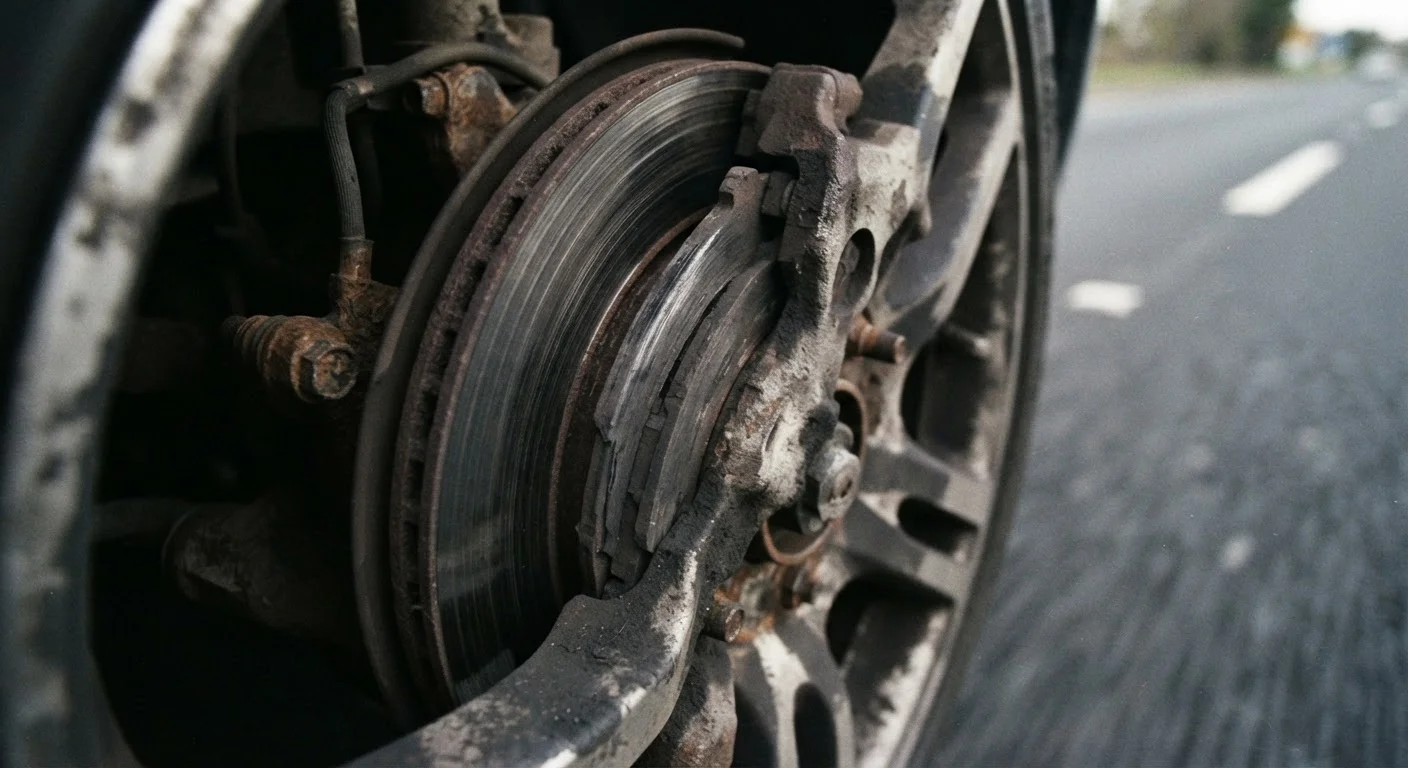
Gentle acceleration uses far less fuel than rapid acceleration and places less stress on the drivetrain and transmission. Anticipating stops allows you to coast and brake gently rather than abruptly, extending brake pad and rotor life considerably.
Use cruise control on highways whenever traffic conditions safely allow.
Cruise control maintains a constant speed more efficiently than manual throttle adjustments, reducing the small but repeated fuel spikes caused by slight speed fluctuations. Over a long highway journey, this can produce a noticeable fuel saving.
Remove unnecessary weight from your vehicle regularly.
Every extra pound your engine carries increases fuel consumption, particularly in city driving where frequent acceleration cycles are required. Many drivers unknowingly carry heavy items in their trunk for weeks or months.
Follow the manufacturer's recommended tire rotation interval.
Front and rear tires wear at different rates depending on whether the vehicle is front-, rear-, or all-wheel drive. Rotating tires on schedule equalizes wear across all four, extending the overall life of the set and avoiding the cost of replacing tires prematurely in pairs or individually.
Smooth, anticipatory driving - sometimes called eco-driving - keeps engine load steady, extends brake life, reduces tire wear, and lowers fuel consumption. It also reduces crash risk. You can read more about the compounding mechanical damage that aggressive inputs cause in our piece on the hidden costs of aggressive driving.
Stick to Your Car's Actual Maintenance Schedule
One of the most expensive myths in car ownership is that maintenance schedules are overly conservative or designed to benefit mechanics. In reality, your owner's manual reflects engineering decisions made for your specific engine, transmission, and cooling system. Ignoring or delaying scheduled services - oil changes, filter replacements, coolant flushes, spark plugs - causes wear that accumulates silently until something fails.
Your Owner's Manual Is the Authoritative Source
Service intervals in your owner's manual are specific to your engine, transmission, and climate conditions. Generic advice found online may not match what your vehicle actually requires. When in doubt, a qualified mechanic can interpret your manual's recommendations in the context of your specific driving conditions - city commuting, for instance, is often classified as 'severe' service by manufacturers and may call for more frequent checks.
Oil change intervals, in particular, are widely misunderstood. Many drivers still follow the outdated "change every 3,000 miles" rule, even when their vehicle's manual specifies 7,500 or even 10,000 miles. Our article on engine oil grades and intervals explains how to read your actual requirements. Conversely, some habits quietly accelerate wear in ways that scheduled maintenance can't fully offset - see habits that wear out a car faster than normal for a practical checklist.
Keeping a maintenance log ties all of this together. A simple record of services, mileage, and costs helps you stay on schedule and makes your car more attractive to future buyers. Learn how in our guide to keeping a car maintenance log.
Monitor Tires and Fluids Weekly - It Takes Less Than Five Minutes
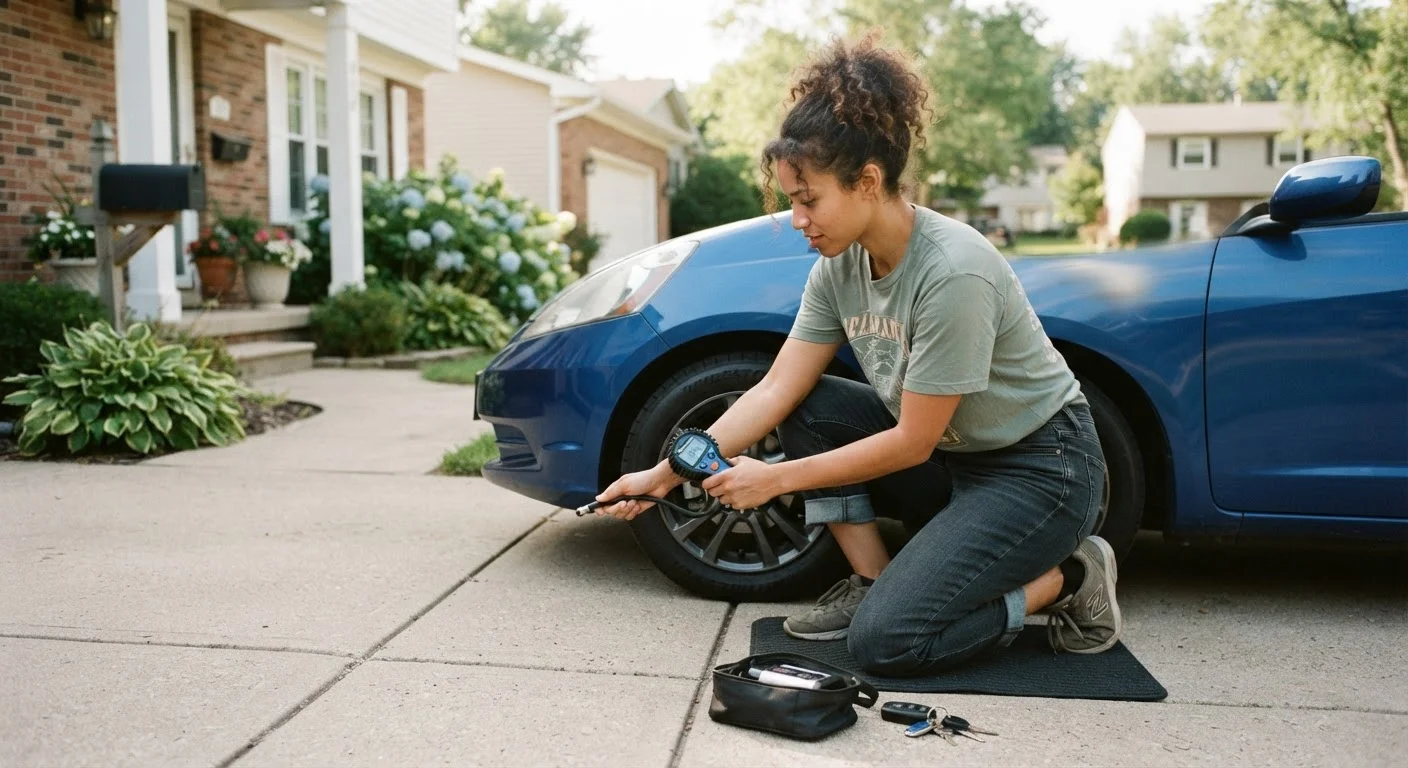
Underinflated tires are one of the most common and costly oversights among new car owners. Running tires even a few PSI below the recommended pressure increases rolling resistance, which raises fuel consumption, and creates uneven wear that shortens tire life. The recommended pressure is printed on a sticker inside the driver's door jamb - not on the tire sidewall, which shows the maximum pressure.
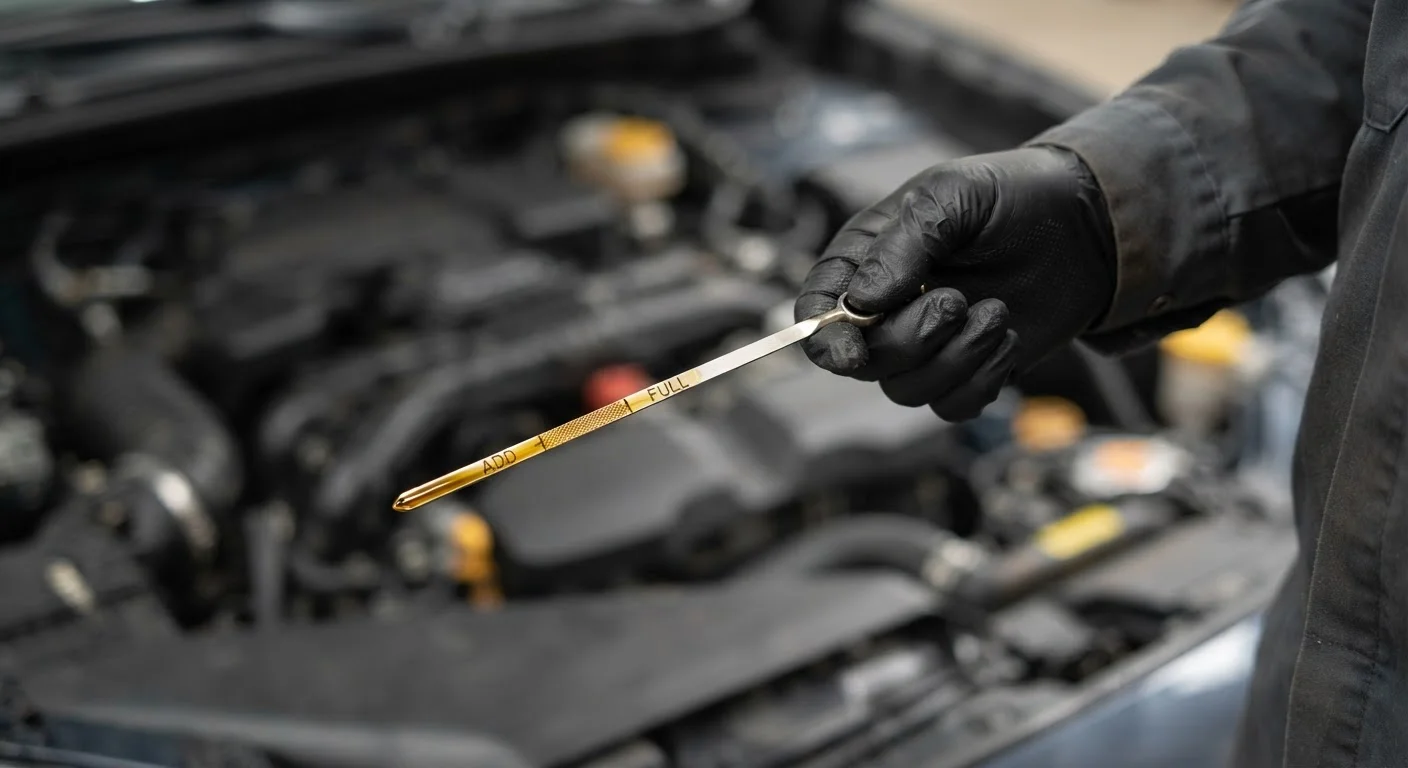
Beyond tires, a quick weekly glance at your engine oil level, coolant reservoir, and windshield washer fluid takes under five minutes and can alert you to a developing leak before it becomes an emergency repair. These checks belong to the broader car maintenance habits that protect both your safety and your wallet.
~20%
Fuel economy loss from underinflated tires
The U.S. Department of Energy estimates that tires underinflated by just 1 PSI per tire can reduce fuel economy by roughly 0.2%, and many drivers run multiple tires significantly below recommended pressure.
Up to 40%
Potential brake life reduction from hard braking
Automotive engineers note that driving style is among the most significant variables affecting brake pad longevity, with aggressive braking habits capable of halving expected service life compared to smooth driving.
Protect Resale Value With Minimal Ongoing Effort
Depreciation - the loss in value a car experiences over time - is often the largest single cost of ownership, even outpacing fuel and insurance over a typical ownership period. You can't eliminate depreciation, but you can slow its impact on resale value through simple protective habits. Our article on how car depreciation works explains the mechanics in full.
Regular washing and waxing removes road salt, bird droppings, and grit that etch paint and accelerate rust. Parking in shade or a garage slows UV-related interior and paint degradation. Keeping the interior clean prevents permanent staining of upholstery and carpets. None of these habits require significant spending - they require consistency. A car maintained to a high standard routinely commands a meaningfully higher resale or trade-in price, which directly reduces the cost of your next vehicle.
This article is for general informational purposes only and does not constitute financial or mechanical advice. Always consult a qualified mechanic for vehicle-specific maintenance decisions and a licensed financial adviser for questions about your personal budget.